FCC lets SpaceX launch a million data-centre satellites, ruling night-sky and atmosphere concerns are outside its authority

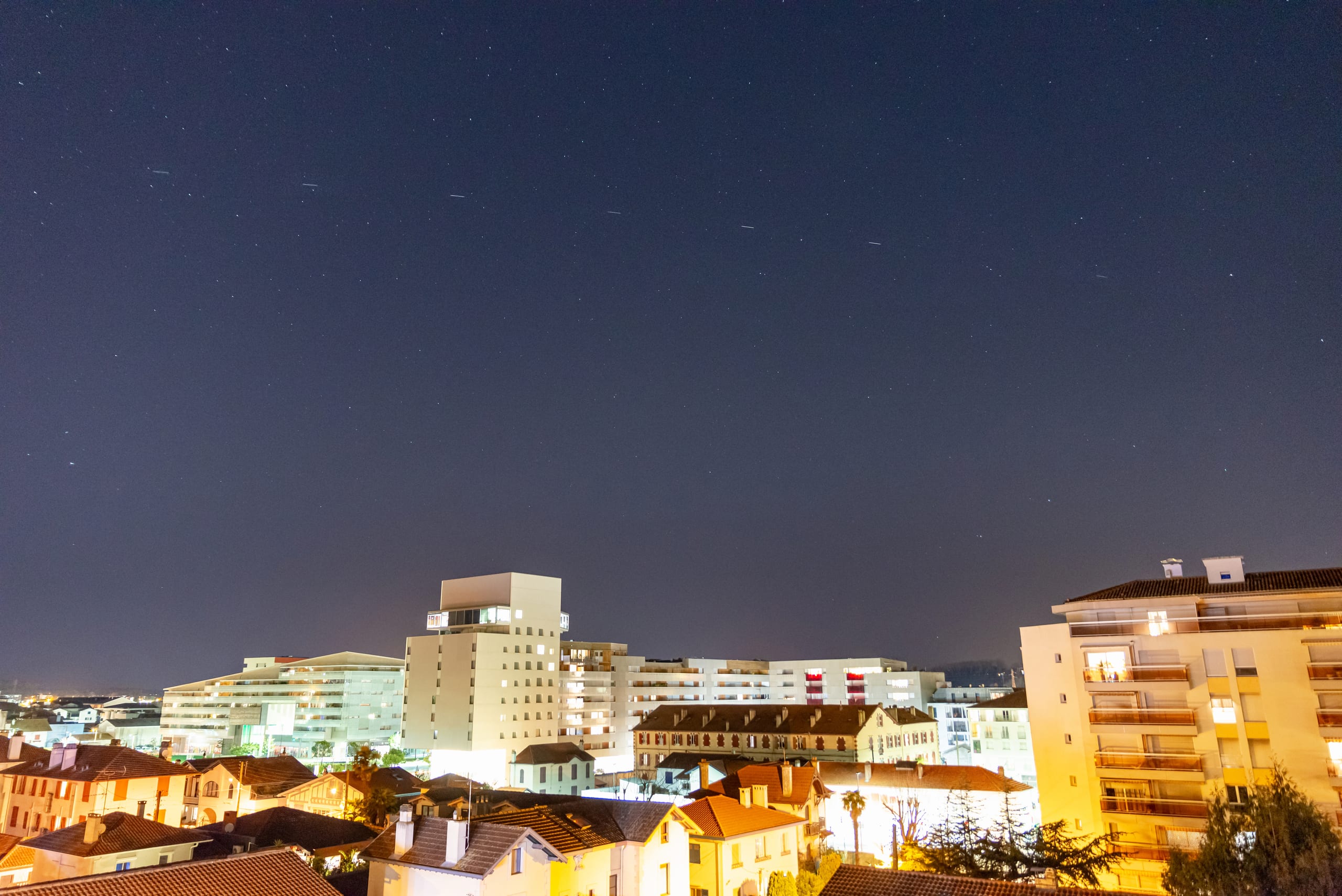
The U.S. Federal Communications Commission has authorized SpaceX to launch up to one million satellites designed to work as data centres in orbit. The regulator brushed aside objections from astronomers, rival satellite operators and a large number of public commenters, ruling that impacts on the night sky and the atmosphere are outside its authority.
The grant, signed Wednesday by Space Bureau chief Courtney Reinhard, covers a constellation SpaceX calls Starmind. SpaceX filed the application in January. The FCC called the approval a first and said the satellites would advance "American leadership in space and artificial intelligence."
What was approved
The order sets out six bands of orbits between about 550 km and 1,000 km above Earth. Half are tilted about 30 degrees to the equator. The other half are near-polar, sun-synchronous orbits, which pass over every latitude, including all of Canada.
The FCC licenses radio use, so the authorization formally covers only a narrow slice of spectrum. SpaceX says the satellites will talk to each other and to its Starlink network by laser. The Ka-band frequencies approved here are for backup and emergency control only. SpaceX must use them on a "non-interference" basis and shut down if it disrupts other operators.
The order also sets deadlines. The licence becomes void unless SpaceX meets them:
- at least one satellite in operation by Nov. 25, 2033;
- 10 per cent of the constellation, or 100,000 satellites, by 2035;
- 50 per cent by 2038;
- the full million by 2040.
The licence runs for 15 years from the first launch. SpaceX must report every six months on close approaches with other objects, failed satellites and re-entries.
The FCC granted SpaceX several waivers. These included its requirement for a surety bond, a financial guarantee that applicants will build what they are licensed for, and its "processing round" rules, which normally make competing operators share spectrum on equal terms.
Debris: approved in part, deferred in part
The FCC found SpaceX's plan for avoiding debris acceptable only for satellites flying below 600 km. For higher shells, SpaceX asked to be allowed to dispose of dead satellites by parking them in higher "disposal" orbits or sending them into orbit around the sun. FCC rules require satellites ending their missions below 2,000 km to re-enter the atmosphere within five years. The bureau said SpaceX had not given it enough information and deferred the request. SpaceX cannot launch satellites above 600 km that won't be brought down through the atmosphere until it files a new application.
Amazon's Kuiper Systems, Viasat and others raised concerns about the collision risk of a million new satellites. The bureau replied that its rules "do not place limits on the number of space stations," and that it "declines to invent a de facto rule" in a single licensing case. For re-entries, it relied on SpaceX's commitments to steer satellites down over the ocean and to design each one to burn up completely.
Astronomers' objections dismissed
The American Astronomical Society filed a formal petition asking the FCC to deny the application. According to the order, the AAS argued that:
- the satellites would be bright to the naked eye;
- the waste heat they shed would raise the infrared glow of the sky and interfere with telescopes;
- the FCC should have done an environmental review.
The FCC rejected all three. It said a rule it adopted in October means satellites in orbit are "extraterritorial" and don't trigger an environmental review under U.S. law. It called concerns about pollution from satellites burning up on re-entry "speculative and not supported in the record." It ruled that the infrared concern was outside the scope of a radio licence. On visible-light astronomy, it accepted SpaceX's promise to coordinate with the U.S. National Science Foundation. It declined to impose any further conditions. In a statement Wednesday reported by The Associated Press, the AAS said it was "disheartened and dismayed."
The order also notes that some comments were about whether the project can work at all, and that some questioned whether one private company should be allowed to make decisions that affect the world. The Royal Astronomical Society was among those named. The bureau said those concerns were not related to its mandate and that it would not "substitute the government's judgment regarding the viability of business endeavors."
The view from Canada
Canada has no say in an FCC licence. The satellites must match SpaceX's filings with the International Telecommunication Union, the UN agency that coordinates satellite spectrum and orbits. Their light, though, will be visible from Canadian skies.
Three Canadian astronomers have studied this question. Samantha Lawler of the University of Regina, Aaron Boley of the University of British Columbia and Hanno Rein of the University of Toronto modelled the night sky as seen from 50 degrees north, about the latitude of Kamloops. They used the brightness of today's Starlink satellites, scaled up for the larger satellites SpaceX is planning. They wrote in March, during the FCC's comment period, that the modelling showed there would be "more visible satellites than stars for large portions of the night and the year." Their estimate relied on the limited details in SpaceX's filing, and they said it carried uncertainty. An earlier paper by the same group, which modelled 65,000 satellites, predicted that one in 15 points of light visible to the naked eye would be a satellite.
The three researchers also noted SpaceX's own difficulty with waste heat. An early Starlink test satellite painted black to reduce glare overheated, they wrote. They said a data centre in orbit would need to shed far more heat while sitting in full sunlight.
The approval does not mean the satellites will be built. The first one doesn't have to be in orbit until 2033. Before the FCC acted, other astronomers had raised the same doubts. Astrophysicist Adam Becker told The Associated Press the plan was "a fantasy."
Sources: Federal Communications Commission, Space Bureau, Memorandum Opinion and Order and Authorization, Space Exploration Holdings LLC, SpaceX Orbital Data Center System, DA 26-1273, ICFS File No. SAT-LOA-20260108-00016, Nov. 25, 2026; FCC news release, "FCC Authorizes 1 Million Satellites for Data Centers in Space," Nov. 25, 2026; Samantha Lawler, Aaron Boley and Hanno Rein, "A million new SpaceX satellites will destroy the night sky — for everyone on Earth," The Conversation, March 2026; The Associated Press, Nov. 25, 2026.