



Category Archives: Science
Pushy NHS chatbots risk putting patients off screening, researchers warn

An AI chatbot that nudges patients to book cancer screening can do more harm than good if it comes across as pushy, impersonal or evasive about being a machine, according to new research from the University of Surrey. The study
Bumble bees solve a problem they were never taught, surprising scientists

A team of Finnish scientists has shown that bumble bees can work out how to solve a problem they have never seen before, improvising a way to reach a reward with no training to guide them. The finding, published this
AI code looks clean. That’s the Trap.

I’ve been running a competition where frontier AI models write Python code, connect to a TCP server, and solve algorithmic programming challenges head-to-head in real time. Each model reads the spec once and generates a bot. That bot then connects
An open-weights Chinese model just beat Claude, GPT-5.5, and Gemini in a programming challenge
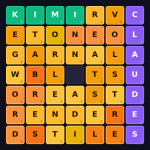
By Rohana Rezel I’m running the ongoing AI Coding Contest where I pit major language models against each other in real-time programming tasks with objective scoring. Day 12 was the Word Gem Puzzle. Ten models entered. The results were not
Don’t give AI agents the keys to production
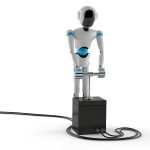
By Rohana Rezel The pitch is seductive. Point an AI agent at your infrastructure, give it a task, walk away. No tickets, no on-call rotations, no waiting for an engineer to get around to it. The agent reads the codebase,
Researchers used brain MRIs to build an AI that thinks like a human brain — and it is more resilient than standard deep learning

A team of researchers in Beijing has built an artificial neural network modelled directly on the primate brain’s visual system — and the result is an AI that makes decisions more like a human and holds up far better under
New wearable sweat sensor uses pH to accurately track blood sugar during exercise
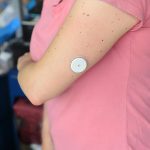
Researchers have developed a wearable sweat sensor that can continuously track blood glucose levels during exercise — a breakthrough that could transform how people with diabetes manage their condition while staying active. The device, described in a study published today
BC’s clocks are staying put. Are your computers?

By Rohana Rezel British Columbia has sprung forward for the last time. On March 2, 2026, the provincial government confirmed that the twice-yearly clock change is over. The final spring-forward happened on March 8, and when November 1 arrives, BC
How Canadian media covers renoviction — and what it misses

A new study published in Housing Studies has examined how Canada’s mainstream print media frames renovictions — the practice of evicting tenants under the guise of renovation — finding that coverage has grown alongside the housing crisis but often stops
Even Tiny Amounts of Altruism Can Stop Epidemics, Game Theory Study Finds

A new mathematical study has found that people don’t need to be saints to justify staying home when they’re sick. In fact, caring about others even a tiny amount — valuing your own life as roughly equivalent to 100,000 strangers
