Webb pins down the most distant 'little red dot' yet, a possible young black hole seen 450 million years after the Big Bang

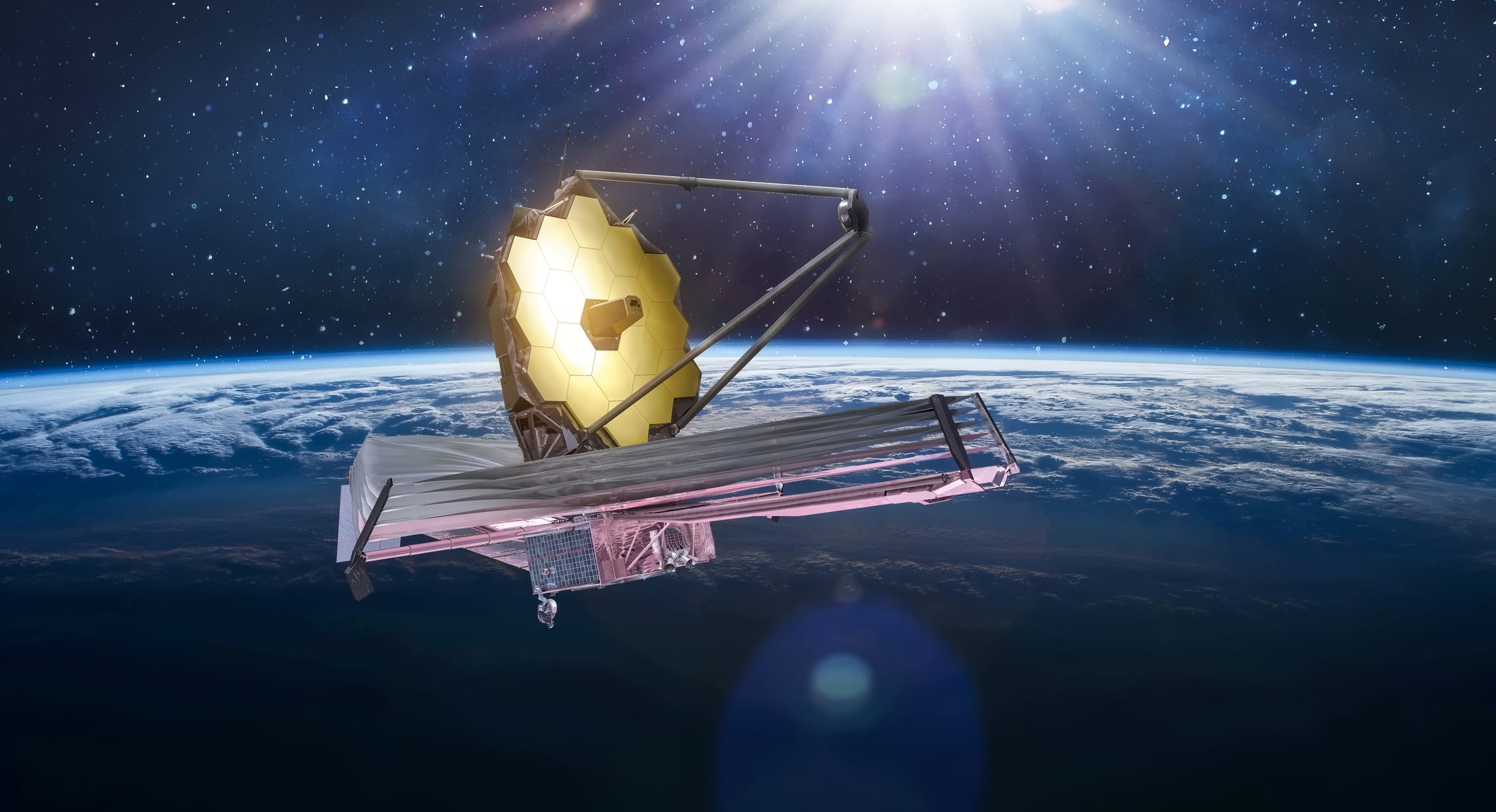
Astronomers using the James Webb Space Telescope have measured the distance to a faint red speck that appears to be the earliest known "little red dot." These are compact objects that may be black holes in an early stage of rapid growth. The light Webb captured left the object about 450 million years after the Big Bang.
The object, called CW-LRD-z10, has a redshift of 10.36, according to a study by an international team of 61 researchers led by Takumi Tanaka, a graduate student at the University of Tokyo's Kavli Institute for the Physics and Mathematics of the Universe. The paper was published Nov. 24 in The Astrophysical Journal Letters. Two of the co-authors, Seiji Fujimoto and Qinyue Fei, are at the University of Toronto's astronomy department.
What a little red dot is
Little red dots were first noticed in Webb images. They are tiny, very red objects in the early universe, and many show signs of a feeding black hole at their core. But they don't behave like ordinary active black holes. Most are not detected in X-rays or radio waves. Their light also has an unusual "V-shaped" pattern: bluish in the ultraviolet and steeply red at visible wavelengths.
Astronomers don't agree on what they are. One idea is that they are young black holes wrapped in thick envelopes of gas. Others suggest dust-reddened black holes or glowing cocoons of ionized gas. The authors write that "we have not yet achieved a unified model of the nature of LRDs." One reason they draw attention is that they may show how the giant black holes found at the centres of today's large galaxies got started.
Measuring the distance
Redshift measures how much an object's light has been stretched by the expansion of the universe on its way to us. The higher the number, the farther away the object is and the earlier in cosmic history we see it. Before this study, the most distant little red dot with a measured redshift was at 9.288. A separate team recently reported a black hole at 9.984 that might also qualify.
Tanaka and colleagues first identified CW-LRD-z10 in 2025. They searched images from the COSMOS-Web survey, which covers 0.20 square degrees of sky, about the area of a full moon, with both of Webb's main infrared cameras. At that distance, the object's telltale red light is stretched beyond the reach of Webb's near-infrared camera, so the team used the mid-infrared camera as well. That search found one strong candidate, with an estimated redshift of about 10.5.
The new paper confirms the distance with a spectrum taken on Nov. 27, 2025, as part of a Webb program called EMBER. It used about an hour and a half of exposure time. The spectrum shows a sharp drop in light at the point where hydrogen gas between the object and us absorbs it. That drop pins down the redshift at 10.36. The authors also ruled out the most common false alarm, a much closer galaxy whose spectrum can mimic this pattern.
The object is also bright for its kind. Its ultraviolet brightness puts it among the most luminous little red dots known. By ThinkPol's calculation from the reported magnitudes, it is about six times brighter in the ultraviolet than the previous redshift record holder.
Still a "candidate"
The authors call CW-LRD-z10 a "candidate," not a confirmed little red dot. They give several reasons:
- The clearest sign of a feeding black hole, broad emission lines from hydrogen at visible wavelengths, has been stretched beyond what this spectrum covers. Without those lines, the paper says, "an unambiguous spectroscopic confirmation has not yet been achieved."
- Most of the emission lines the team found are weak, with signal-to-noise ratios of about 2 to 4. The strongest are carbon and oxygen lines at 3.9 and 3.6. The authors call these detections "tentative."
- A possible iron feature and an unusual oxygen line ratio point toward a black hole. However, the authors say the line ratios "do not rule out ionization by star formation." If the iron is real, it would mean stars had already produced and spread heavy elements within the first 450 million years.
- The authors could not exclude a black hole simply hidden by dust. They note that this explanation and the other little-red-dot models may not be mutually exclusive.
The authors argue against an ordinary galaxy being the explanation. The object is very bright in Webb's mid-infrared images. To produce that much light, a normal galaxy would need emission far stronger than theory predicts or than has been seen in any galaxy. Taken together, they say, a little red dot is "the most plausible explanation."
Why it matters
The finding pushes the search for growing black holes back toward the era when the first "seed" black holes are thought to have formed. In the earlier paper, the team estimated how common such objects were around redshift 10. Their figure suggested that about 3 per cent of galaxies at that time could be little red dots. That estimate rests on a single object, and its uncertainty is large.
The researchers plan to use Webb to take a mid-infrared spectrum of the object, which should capture the hydrogen lines missing from the current data. They say a larger sample of very distant little red dots will need more mid-infrared observations.
Sources: Takumi S. Tanaka et al., "EMBER: A Little Red Dot Candidate at zspec = 10.36 in the Seed Black Hole Era," The Astrophysical Journal Letters, 2026, DOI 10.3847/2041-8213/aebc8d (arXiv:2611.00195); Takumi S. Tanaka et al., "Discovery of a Little Red Dot candidate at z ≳ 10 in COSMOS-Web based on MIRI-NIRCam selection," The Astrophysical Journal, Dec. 2, 2025, DOI 10.3847/1538-4357/ae145f (arXiv:2508.00057); Kavli IPMU news release, Nov. 25, 2026.