Court asked to skip $840,000 Surrey school-trustee by-election and seat seventh-place finisher after trustee became MLA

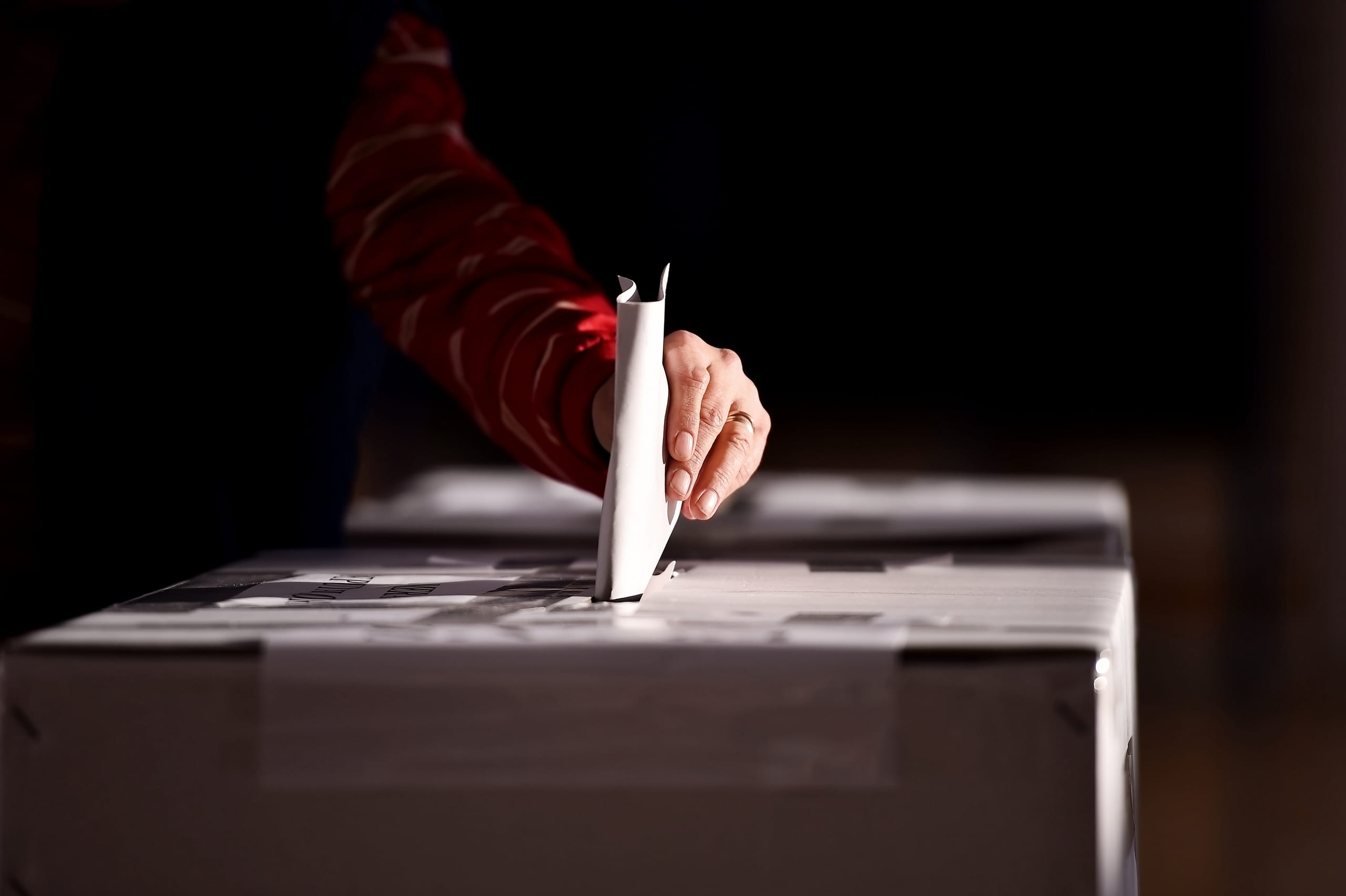
A B.C. Supreme Court judge will decide next week whether Surrey must hold an $840,000 by-election to replace a school trustee who was elected to the legislature a week after winning his seat, or whether the seventh-place finisher in October's trustee race can simply take his place.
Garry Thind finished second of 24 candidates for Surrey's six school-trustee seats on Oct. 17, with 43,893 votes, according to the city's official results. A week later he won Surrey-Guildford for the B.C. Conservatives in the provincial election. He was sworn in as an MLA on Nov. 19 and did not join the other trustees when they took office on Nov. 4.
Surrey's chief election officer, Gib van Ert, has filed a petition asking the court to declare the runner-up elected in Thind's place, CBC News reported Wednesday. The hearing is set for Tuesday, Dec. 1, in Vancouver.
Why the seat is empty
Under the Eligibility to Hold Public Office Act, passed in May 2025, an MLA cannot hold a local elected office, including school trustee. A local official who becomes an MLA is "conclusively deemed to have resigned" the local office on the day the writ for their riding is returned. The law says the seat is then vacant as if the person had resigned under the law that governs that office.
For a school board, that law is the School Act. It says an election "must be held" to fill a vacancy when a trustee resigns. Because Surrey runs trustee elections for the school district, the board must notify the city within 30 days of the vacancy, and voting day must fall no more than 80 days after the city appoints a chief election officer. The act lets a board leave a seat empty only if the vacancy occurs after Jan. 1 of a general election year, which doesn't apply here.
The school district, not the city, pays. The School Act requires a board to reimburse the municipality for "the costs necessarily incurred" in running a trustee by-election.
Two ways around a by-election
Van Ert first tried a different route. A Nov. 5 report to Surrey council from the city's corporate services department says he asked Christine Boyle, then the minister responsible, on Nov. 4 to use her power under section 167 of the Local Government Act. That section lets the minister make "any order the minister considers appropriate" because of "special circumstances regarding an election." Van Ert asked her to order that the candidate with the next-highest vote total be declared elected instead of Thind. The report said that if the minister did not make the order, the city would have to hold a by-election, at an estimated cost of about $840,000.
The public record does not show whether Boyle ruled on the request before Premier Lorne Doerkson's cabinet was sworn in on Nov. 20. Responsibility for local elections now falls to Cathie Ounsted, the minister of local government, housing, sport and culture.
The court route comes from the same act. Section 153 lets a chief election officer apply to the Supreme Court within 30 days of the official results, which in Surrey were declared on Oct. 21. One ground for an application is that a candidate declared elected "has ceased to be qualified to hold office" between the election and the time for taking office. Under section 155, the court can then confirm the candidate, declare the seat vacant, or declare "that the candidate who received the next highest number of valid votes is elected in place of the disqualified candidate."
Van Ert's petition argues that Thind's election as MLA disqualified him and that the runner-up should be "elected in place," according to CBC. In an affidavit, he wrote that a by-election "is undesirable given the very recent expression of democratic will on this question." He cited the cost and "public confusion and upset" from another vote so soon after the general elections.
Who would get the seat
The next-highest finisher was Gary Tymoschuk, with 32,681 votes, 1,507 behind sixth-place Michelle Ceniza, according to the city's results. Turnout in Surrey's 2026 local election was 37.3 per cent, the highest since at least 2005.
Not every losing candidate agrees. Amrit Birring, who finished 13th, told CBC that a by-election is the normal procedure for a vacant seat and that he would file his own petition to force one. "When people voted, they voted [for the] top six people," he said. Ninth-place finisher Anne Whitmore said the province, not the financially stretched school district, should pay if a by-election is held.
What $840,000 buys
An affidavit from Surrey's city clerk puts the cost of a by-election at $839,404.72, CBC reported. That includes $257,000 for staffing, $273,333.27 for hardware and software, and $254,033.80 to produce and mail voter cards. The general election in October had 359,921 registered voters.
Van Ert and Thind both declined to comment to CBC while the case is before the court.
Sources: City of Surrey Corporate Report R204, "2026 Local Government and School Trustee Election – Official Results," Nov. 5, 2026; Eligibility to Hold Public Office Act, SBC 2025, c. 9, s. 1–2; School Act, RSBC 1996, c. 412, ss. 36–38; Local Government Act, RSBC 2015, c. 1, ss. 153, 155, 167; CBC News, "Court to decide whether Surrey holds costly byelection to fill vacant school trustee seat," Nov. 25, 2026 (petition, affidavits and candidate comments).