Canal Flats delays vote on 400-person work camp tied to IREN's data centre expansion, as IREN says it has no deal to use it

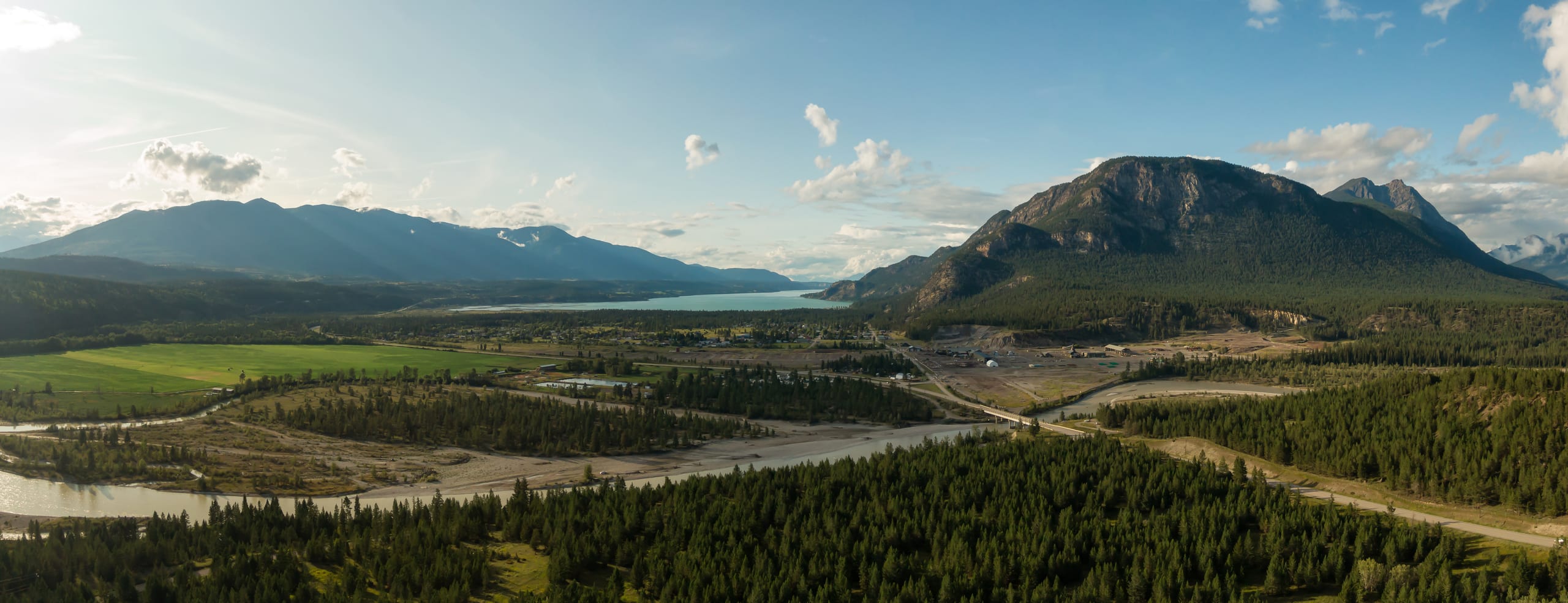
The Village of Canal Flats, a community of about 800 people at the south end of Columbia Lake, has until Dec. 14 to decide whether to allow a temporary camp for up to 400 workers. The camp is tied to the expansion of IREN's AI data centre there. The company says it has no agreement to use it.
Council records show staff recommended approving the permit, with conditions, at a special meeting on Wednesday. Council instead put off the vote to Dec. 14 so it could gather more information, CBC News reported. A second, separate application for a 220-person camp arrived on Monday, the day of the public hearing on the first one.
Two camp applications
The first application, TUP-02-2026, came from CF Bidco Property Holdings Ltd. and is dated Oct. 7. It asks for a temporary use permit for a work camp at 4980 Baillie Grohman Avenue, on land zoned for master-planned mixed use, where a camp is not a permitted use. In the Nov. 9 staff report, the camp would house 130 to 400 people from November 2026 to November 2028 while they built "an industrial development within the village." By Wednesday's report, the timeline had become "approximately two years in 2027 and 2028."
Under B.C.'s Local Government Act, a temporary use permit can allow a use that zoning does not, for up to three years, renewable once. Council can attach conditions to it.
The second application, TUP-03-2026, is from 1368222 B.C. Ltd. and is dated Nov. 23. It proposes a camp for about 220 people for 12 months at 9111 Highway 93/95, on land zoned gateway commercial. Staff recommended a public hearing on Dec. 14 at 6 p.m. Like the first report, this one says the camp's workers "will be constructing an industrial development within the Village." Neither report names the development.
What staff recommended
Chief administrative officer Cynthia White's report for Wednesday's meeting recommended approving the first permit with a long list of conditions:
- proof of a contract with a local industry that needs workforce housing before any site work begins
- a fenced site with controlled access, round-the-clock security and cameras
- no alcohol or drugs on site, and a code of conduct for residents
- connection to village water and sewer, and an emergency plan prepared with the fire department, ambulance service and RCMP
- $100,000 to the village for extra wear on local roads, under its extraordinary traffic bylaw
- a letter of security worth 125 per cent of the development's value, with the site restored within six months of the camp closing
The draft left the maximum number of beds blank.
Before it votes, council asked for an engineering assessment of the village's water and sewer capacity, and for comments from emergency services, Interior Health and the RCMP, CBC reported. Even with a permit, the camp would still need development, servicing and building permits.
IREN: "no agreement, contract or commitment"
IREN, the Australian-founded, Nasdaq-listed company formerly called Iris Energy, runs a data centre in Canal Flats. It built its B.C. business mining bitcoin and is now moving those sites to AI cloud computing. In its annual report filed with the U.S. Securities and Exchange Commission in August, it lists Canal Flats as a 30-megawatt site, alongside Prince George at 50 MW and Mackenzie at 80 MW. The company says it aims to finish its shift away from bitcoin mining by Dec. 31.
When it released its annual results on Aug. 27, IREN said it plans "new liquid-cooled deployments" at Mackenzie, Canal Flats and Prince George in 2027 "to optimize use of power headroom at existing sites." Its filings give no size or cost for the Canal Flats work.
At Monday's public hearing, IREN's Canadian project director, Erik Munck, said the camp application had been prompted by the company's project activities. But "IREN has no agreement, contract or commitment of any kind to use the proposed camp," he said, according to CBC. The company expects about 200 construction jobs, plans to hire locally where it can, and expects many workers to stay in existing housing in the Columbia Valley.
That matters because staff's first condition is proof of a contract with a local industry that needs the housing.
ʔaq̓am opposes the expansion
On Nov. 6, Chief Cheryl Casimer of ʔaq̓am, a Ktunaxa community near Cranbrook, wrote to Mayor Maddi Taylor to state the nation's "strong opposition to this expansion proceeding." Her letter says ʔaq̓am understood the expansion "will require a workforce of 800 people over the next year." That is four times the figure IREN gave at the hearing. "Work camps and data centers are of deep concern to us given the risks they pose to our citizens and to the environment," Casimer wrote. She asked for a council-to-council meeting before any permits are issued.
On Nov. 9, council received the letter and authorized the mayor to arrange a leadership round table with all local First Nations councils on the data centre expansion and the camp, according to the minutes. At the same meeting, Coun. Kobza recused herself from the camp vote, citing a perceived conflict of interest.
Village staff told the hearing they had received 15 letters opposing the camp and two supporting it, CBC reported. Speakers raised concerns about fire and ambulance coverage, infrastructure and the environment. Others said the village needs the jobs and families it lost when the sawmill, the village's main employer for nearly 90 years, closed in 2015.
The power question
Since Feb. 1, new electricity for data centres in B.C. has been handed out through a competitive process run by BC Hydro, with an aggregate cap, under the NDP government's Bill 31. The first call offered up to 400 MW and drew 15 applications asking for close to 800 MW. As ThinkPol reported last week, BC Hydro has put off naming the winners until the new government is in place.
IREN's description of the 2027 work as using "power headroom at existing sites" suggests the Canal Flats expansion would draw on capacity the site already has, not on a new allocation. The filings do not say so directly.
Premier Lorne Doerkson's mandate letter to Energy Minister Larry Neufeld, released Tuesday, tells him to help industrial customers "meet their required in-service dates for grid connections and clear the backlog of connection requests." It does not mention data centres.
Small communities across Canada are facing the same kind of decisions. In a piece published Wednesday, Simon Enoch of the Canadian Centre for Policy Alternatives argued that provinces racing to attract data centres are increasingly overriding local governments. He cited Ontario's land tribunal, Alberta's proposed rules and the appointed council in Sherwood, Sask. Canal Flats, for now, still has the decision.
Sources: Village of Canal Flats, council agendas and staff reports for Nov. 9, Nov. 23 and Nov. 25, 2026 (TUP-02-2026 and TUP-03-2026), minutes of Nov. 9, 2026, and notice of public hearing, Nov. 10, 2026; letter from Chief Cheryl Casimer, ʔaq̓am, Nov. 6, 2026; IREN Ltd. Form 10-K for the year ended June 30, 2026, and FY26 results release, Aug. 27, 2026 (SEC EDGAR); mandate letter from Premier Lorne Doerkson to Larry Neufeld, Nov. 24, 2026; CBC News, Nov. 25, 2026, for remarks at the public hearing and council's deferral; Canadian Centre for Policy Alternatives, Nov. 26, 2026.