B.C.'s home owner grant costs $925 million a year with no income test, four times its credit for renters

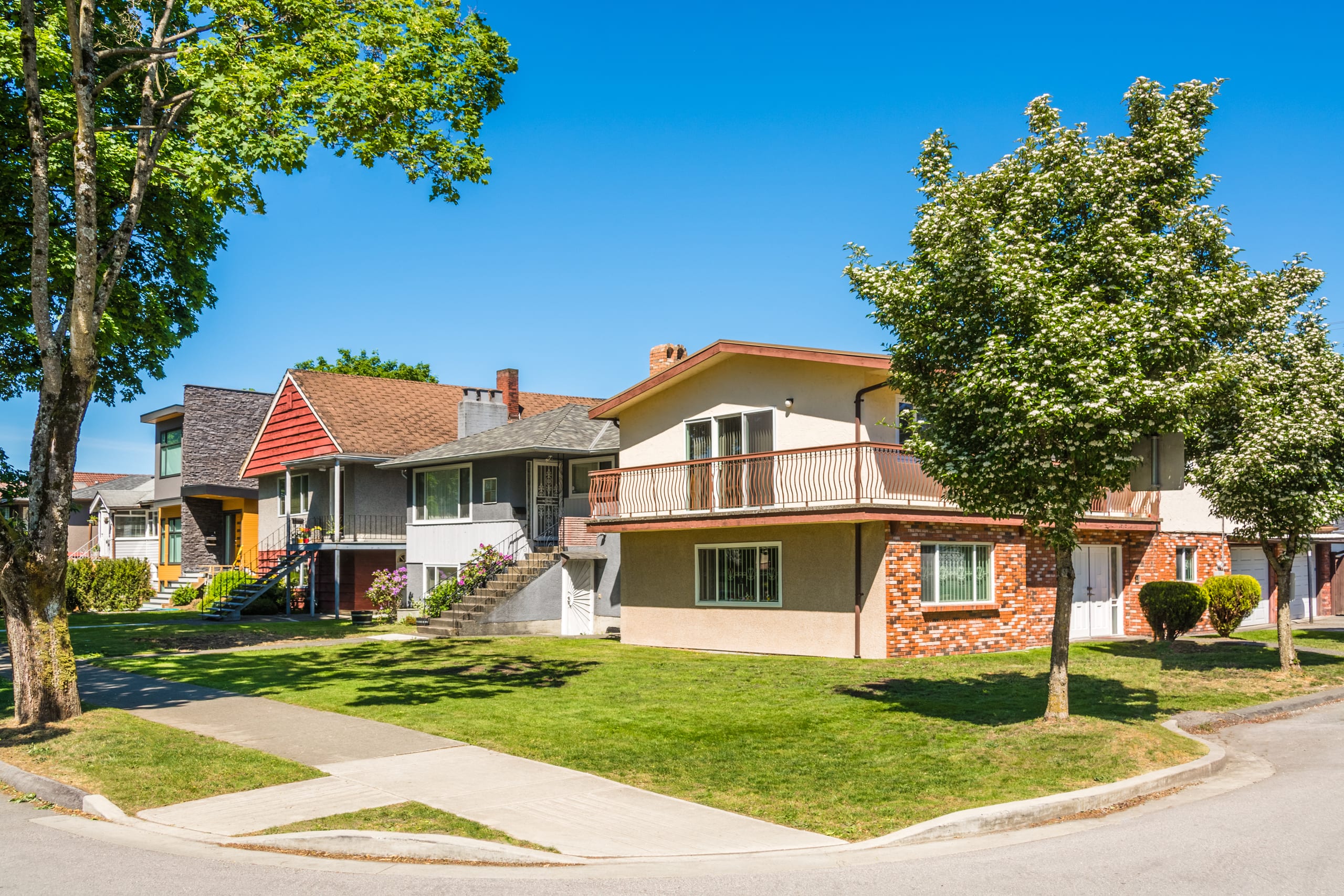
British Columbia will spend about $925 million this fiscal year cutting the property taxes of homeowners, with no check on how much they earn. That is four times what it spends on its income-tested credit for renters.
The home owner grant, which dates back to 1957, is one of the province's largest single tax breaks. Vancouver architect and planner Michael Geller argued in The Tyee this week that the program is "a relic of the past" and should be reworked so money goes to those in greater need. ThinkPol looked at what the province's own budget documents say about who gets the grant and what it costs.
Who gets it
Any Canadian citizen or permanent resident who owns and lives in a home in B.C. can claim the grant against their property taxes, as long as the home's assessed value is under a threshold. The grant is not linked to income or to how much is owed on a mortgage.
- Regular grant: $570.
- Additional grant for seniors, veterans and people with disabilities: up to $275 more, or $845.
- Northern and rural benefit: an extra $200 for homeowners outside the Capital, Metro Vancouver and Fraser Valley regional districts. It was introduced in 2011 to offset the carbon tax and ends on Jan. 1, 2027.
For 2026, the full grant goes to homes assessed at $2,075,000 or less. Above that, it shrinks by $5 for every $1,000 of value and disappears at $2,189,000 for the regular grant. The province adjusts the threshold every January so that the same share of B.C. homes stays below it as the year before. In other words, the cutoff is designed to exclude only the most expensive homes.
That means a homeowner with a $2-million house in Vancouver or West Vancouver gets the same $570 as the owner of a $600,000 condo in Surrey. The budget notes that the grant is worth more relative to taxes paid on lower-valued homes, because it is a flat amount.
What it costs
According to the tax expenditure tables in the province's 2026 budget, the grant cost $914 million in 2024-25, an estimated $931 million in 2025-26, and a planned $925 million in 2026-27.
The previous NDP government trimmed it slightly. Repealing the $200 northern and rural benefit saves $24 million this fiscal year and $97 million a year after that, according to the budget. The fiscal plan forecasts grant spending falling to $871 million in 2027-28 before rising again to $891 million in 2028-29.
Renters get a quarter as much
B.C.'s main direct property-related support for tenants, the renter's tax credit, is much smaller and is income-tested. It pays up to $400 a year. For 2026, the credit starts shrinking once a household's adjusted income passes $66,189 and is gone at $86,189. The budget puts its cost at $232 million in 2026-27.
About a third of B.C. households rent, according to the 2021 census.
Homeowners with low incomes do have extra help. Low-income seniors and some others whose grant is cut back because of a high assessment can apply for a low-income grant supplement, and seniors and families with children can defer their property taxes through a provincial loan program.
Not on the new government's list, yet
Premier Lorne Doerkson's mandate letter to Finance Minister Peter Milobar, released Tuesday, does not mention the home owner grant. It tells him to appoint a blue-ribbon panel to review B.C.'s tax system and report within 180 days with a plan to "simplify the tax system, make it more efficient and attract more investment." It also orders him to restore the previous terms of the seniors' property tax deferral program and to raise the basic personal income tax amount to $32,000 in 2027, a change the letter says is worth about $1,000 per person.
The letter also calls on every minister to "scrutinize programs and spending" and "make difficult choices where necessary." Geller writes that previous governments have been reluctant to touch it because doing so was seen as "political suicide."
Sources: Government of British Columbia, Budget and Fiscal Plan 2026/27 to 2028/29 (Feb. 17, 2026), tables 2.1 and A1.3 and material assumptions; Province of B.C., home owner grant program pages and property tax updates; Province of B.C., renter's tax credit page; Premier Lorne Doerkson, mandate letter to Minister of Finance Peter Milobar, Nov. 24, 2026; Michael Geller, The Tyee, Nov. 24, 2026; Statistics Canada, 2021 Census of Population.