The mutations behind acute myeloid leukemia often start before age 20, study of stored blood samples finds

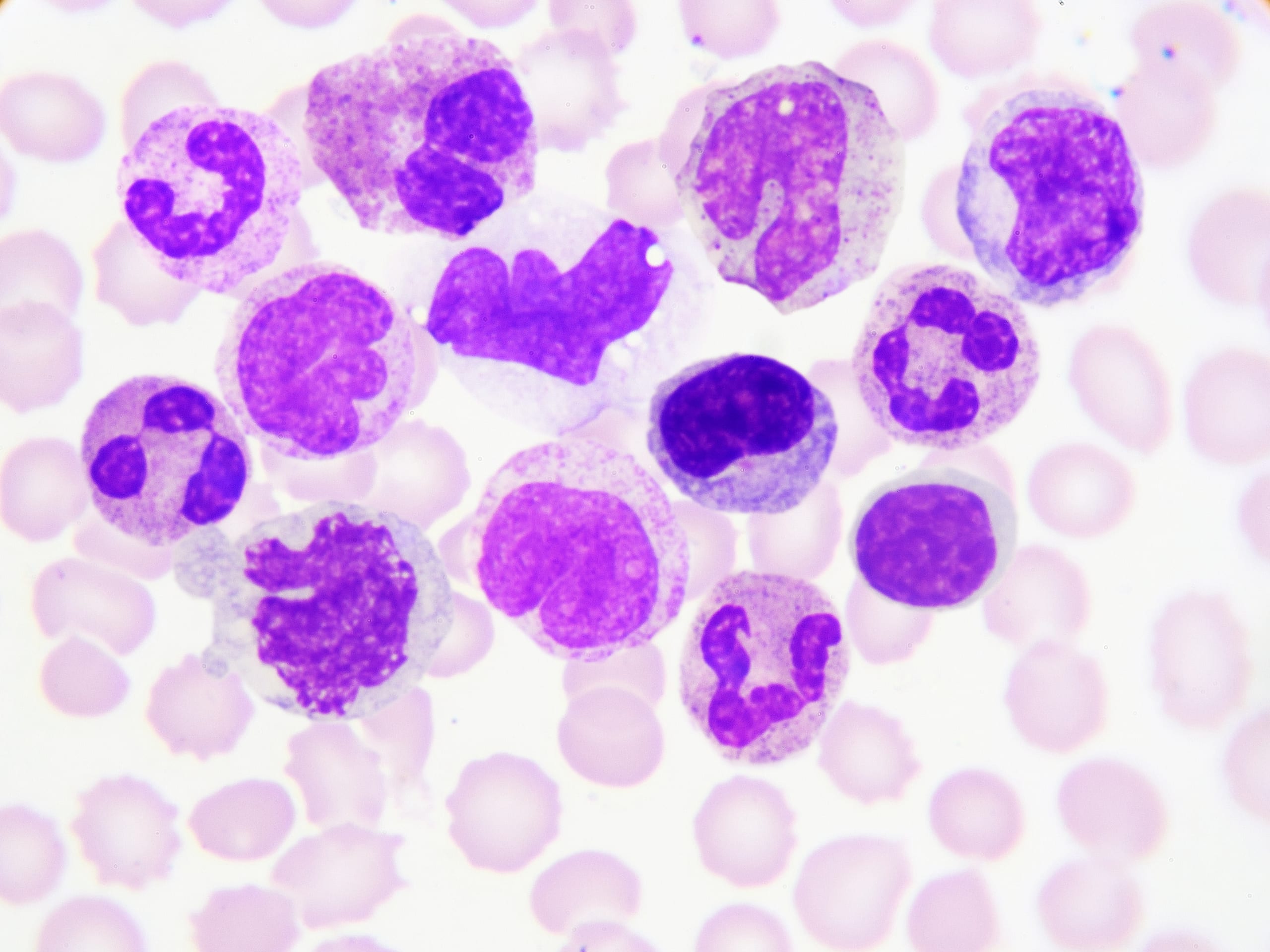
The genetic changes that end in acute myeloid leukemia, one of the most aggressive blood cancers, typically begin decades before anyone is diagnosed, often in childhood or early adulthood, according to a study published in Nature.
Researchers at the University of Cambridge and University College London traced the disease backwards through blood samples that 47 British women had given every year for up to a decade, in some cases starting 15 years before their diagnosis. In about two-thirds of them, the team estimates that the first cancer-driving mutation had already appeared by age 20. On average, that first mutation arose more than 50 years before diagnosis.
A trial for a different cancer
The samples came from the UK Collaborative Trial of Ovarian Cancer Screening, which enrolled more than 200,000 post-menopausal women between 2001 and 2005. About 50,000 of them gave a blood sample every year for up to 11 years, and the frozen samples were kept. The researchers searched that group for women later diagnosed with acute myeloid leukemia (AML) who had at least two stored samples from before diagnosis. They found 47, diagnosed at a median age of 72.
The team sequenced DNA from 249 of these samples using a highly sensitive method it designed, called TETRIS-seq, which can detect mutations carried by as few as one in 1,000 blood cells. It ran the same tests on matching samples from 46 women of the same age who did not develop blood cancer.
The women were already 50 or older when the samples were taken. The researchers did not observe mutations appearing in childhood. They estimated when each mutation first arose by measuring how fast the mutated cell populations were growing across the yearly samples and working backwards with a mathematical model of how clones of blood cells expand and compete.
Slow for decades, then fast
The picture that emerged is one of long, slow growth followed by acceleration. A blood stem cell carrying a single early driver mutation, often in genes such as TET2 or DNMT3A, typically gives its descendants an edge of about 10 to 30 per cent a year, so the mutated population takes roughly two to seven years to double.
Each further driver mutation multiplied that growth rate by about two to three times. Clones with four driver mutations grew by roughly 100 to 1,000 per cent a year, doubling within weeks or months. A third of the women had picked up a second driver mutation by age 50.
In one woman, the model put a TET2 mutation at about age 39. It grew slowly for about 30 years, doubling roughly every 2.4 years, until two more mutations arrived around age 67. The resulting clone doubled about every eight weeks, and she was diagnosed at 70.
The researchers also found that once a clone was established, its future growth was strikingly predictable. A few measurements were enough to forecast where it would be years later, without needing to account for the structure of the bone marrow.
Most people with these mutations never get leukemia
Blood-cell mutations of this kind are common with age, a condition known as clonal hematopoiesis. The study found them in 72 per cent of the healthy controls, as well as 89 per cent of the women who went on to develop AML. In the controls, though, the mutated populations stayed small and stable. In the future AML patients, they were larger, changed more and spread across a wider range of genes.
The clearest difference was what the researchers call a "somatic sweep," in which descendants of a single mutated stem cell take over essentially all of a person's blood. That had happened in at least a third of the AML cases, often years before diagnosis. None of the controls showed it.
To test whether sweeps could flag risk in the wider population, the team turned to the UK Biobank, which holds genetic data on about 420,000 people. Of the 388 people with a sweep at one of 27 well-known mutation sites, 42 were later diagnosed with myeloid leukemia, about 11 per cent. In the cohort as a whole, the rate was about one in 800. That makes the odds about 107 times higher for people with a sweep.
The authors point out that standard genetic testing can miss sweeps. When a mutation is present in almost every blood cell, it looks like an inherited variant and is often filtered out. They suggest a second tissue sample, such as a cheek swab, could tell the two apart.
What it does and doesn't mean for screening
There is no screening test for leukemia risk coming out of this study. The authors describe the long lag between the second or third mutation and diagnosis, often more than a decade, as "a long window of opportunity for intervention." Because clone growth is exponential, they argue, even slowing a high-risk clone modestly over many years could sharply cut the chance it becomes cancer. Drugs that target IDH mutations are one possibility they raise. All of this is framed as speculation and has not been tested.
The study has several limitations, which the authors spell out:
- It is small: 47 cases, all women, all from one British trial.
- The team did not have the patients' tumour samples, so it cannot be certain that the clones seen in earlier blood samples are the ones that became leukemia.
- Mutations common at diagnosis, such as NPM1 and FLT3, were rare in the earlier samples, which suggests they arrive late, possibly after the last sample was taken.
- About one in five cases showed no detectable precursor, or one that appeared only in the last year or two. The authors say these may involve mutations their gene panel did not cover.
- Information on earlier blood disorders and chemotherapy came from registry records rather than clinical charts.
- The researchers were not blinded to which samples came from future patients.
The study does fit a long-standing idea that cancer needs several "hits" to develop, and it gives some of the first direct measurements of how fast each hit lets cells grow in people before they become ill.
Source: Watson, C.J. et al., "Evolutionary dynamics in the years preceding acute myeloid leukaemia," Nature, published online Nov. 11, 2026, doi:10.1038/s41586-026-11269-x (open access, CC BY 4.0).