BepiColombo enters orbit around Mercury after an eight-year trip

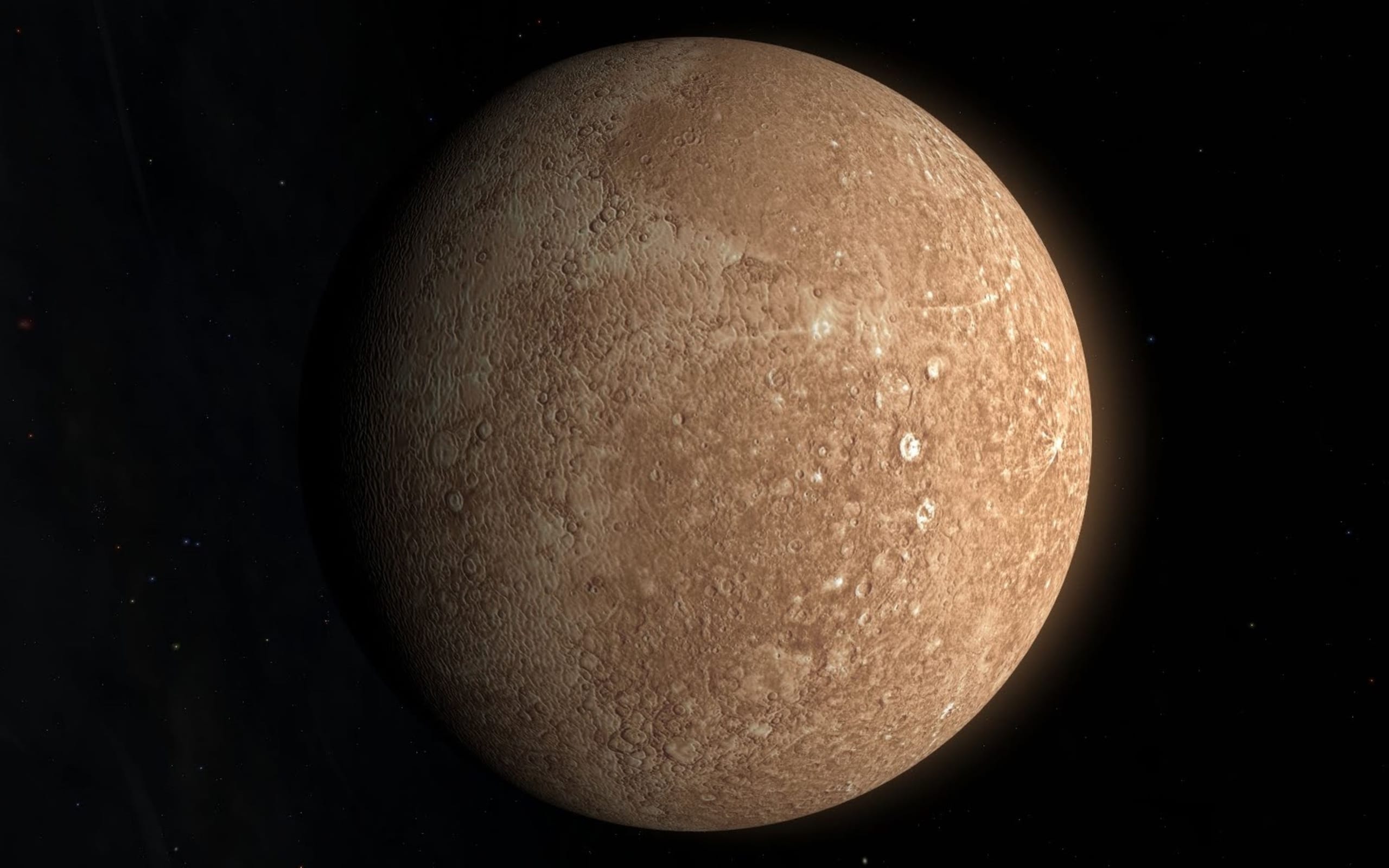
The European–Japanese BepiColombo spacecraft is in orbit around Mercury, eight years after it left Earth, the European Space Agency says. It is only the second mission to orbit the innermost planet, after NASA's MESSENGER, which circled it from 2011 to 2015.
ESA's mission control in Darmstadt, Germany, confirmed on Nov. 21 that the spacecraft had been captured by Mercury's gravity, after four thrusters on the European orbiter fired to slow it down. BepiColombo went into an elongated polar orbit of roughly 590 by 11,640 kilometres.
The burn did not go entirely to plan. ESA said in an update the next day that it was shorter than planned because of a software issue, according to The Next Web, and that the spacecraft is safe while engineers work out what the shortfall means for the orbit. ThinkPol could not find that update on ESA's website.
Two spacecraft, two orbits
BepiColombo is really two science spacecraft that made the trip stacked together. ESA built the Mercury Planetary Orbiter (MPO), which will study the planet's surface, interior and composition. The Japan Aerospace Exploration Agency (JAXA) built the Mercury Magnetospheric Orbiter, known as Mio, which will study Mercury's magnetic field and how it interacts with the solar wind.
Mio is still sheltered inside a sunshield on top of MPO. The two are scheduled to separate on Dec. 9–10, leaving Mio in its long, looping orbit. MPO will then shed Mio's sunshield on Dec. 16 and use its thrusters over the following months to lower itself into a much tighter orbit, closer to the surface, by March 10, 2027. Science operations are scheduled to begin on April 6, 2027. ESA notes that the dates may change for operational reasons.
Once they separate, BepiColombo will be the first mission to have two spacecraft orbiting Mercury at the same time, letting scientists measure the planet's magnetic environment from two places at once.
Why it took eight years
BepiColombo launched on an Ariane 5 rocket on Oct. 20, 2018. Getting into orbit around Mercury is harder than it looks: a spacecraft falling toward the Sun picks up speed, and it has to shed that speed to be captured by a small planet. ESA says the mission needed more energy than a trip to Pluto. BepiColombo used electric propulsion and nine planetary flybys to slow down: one of Earth, two of Venus and six of Mercury.
The arrival was originally planned for December 2025. A power problem with the electric thrusters, discovered in 2024, pushed it back by about a year onto a new trajectory, JAXA said at the time. The module that carried those thrusters separated from the two orbiters on Sept. 3.
Instruments already working
With the transfer module gone, the instruments on MPO could see open space for the first time, and ESA says they are in good health. The laser altimeter BELA fired more than 700,000 pulses during a 21.5-hour test, and the thermal imaging spectrometer MERTIS showed little loss of sensitivity since its last ground calibration in 2013.
The Mercury Imaging X-ray Spectrometer (MIXS), built by a consortium led by the University of Leicester, made its first observations of the Crab Nebula on Sept. 11 and 12. Over 39 hours, the spacecraft turned 55 times to point it. The university says the telescope's sharpness was slightly better than in laboratory tests in 2015, and that its detector shows no radiation damage after eight years in space. MIXS is the first imaging X-ray telescope sent on a planetary mission. At Mercury, it will map the elements on the surface by detecting the X-rays that rocks give off when they are hit by X-rays from the Sun.
"We have waited a long time to make measurements with MIXS and it is fantastic to see it operating brilliantly in space," said Emma Bunce, the instrument's principal investigator.
What scientists want to know
Mercury is the least explored of the rocky planets. Among the questions the mission is meant to answer: why such a small planet has a global magnetic field, why there appears to be ice in permanently shadowed craters near its poles despite its closeness to the Sun, and what formed the shallow, bright depressions on its surface known as hollows.
Sources: European Space Agency, BepiColombo arrival timeline, factsheet and arrival updates; University of Leicester via ScienceDaily (MIXS first light); Nature; The Next Web (shortened burn).