Weight training cut muscle loss and boosted strength in people on obesity drug tirzepatide, trial finds

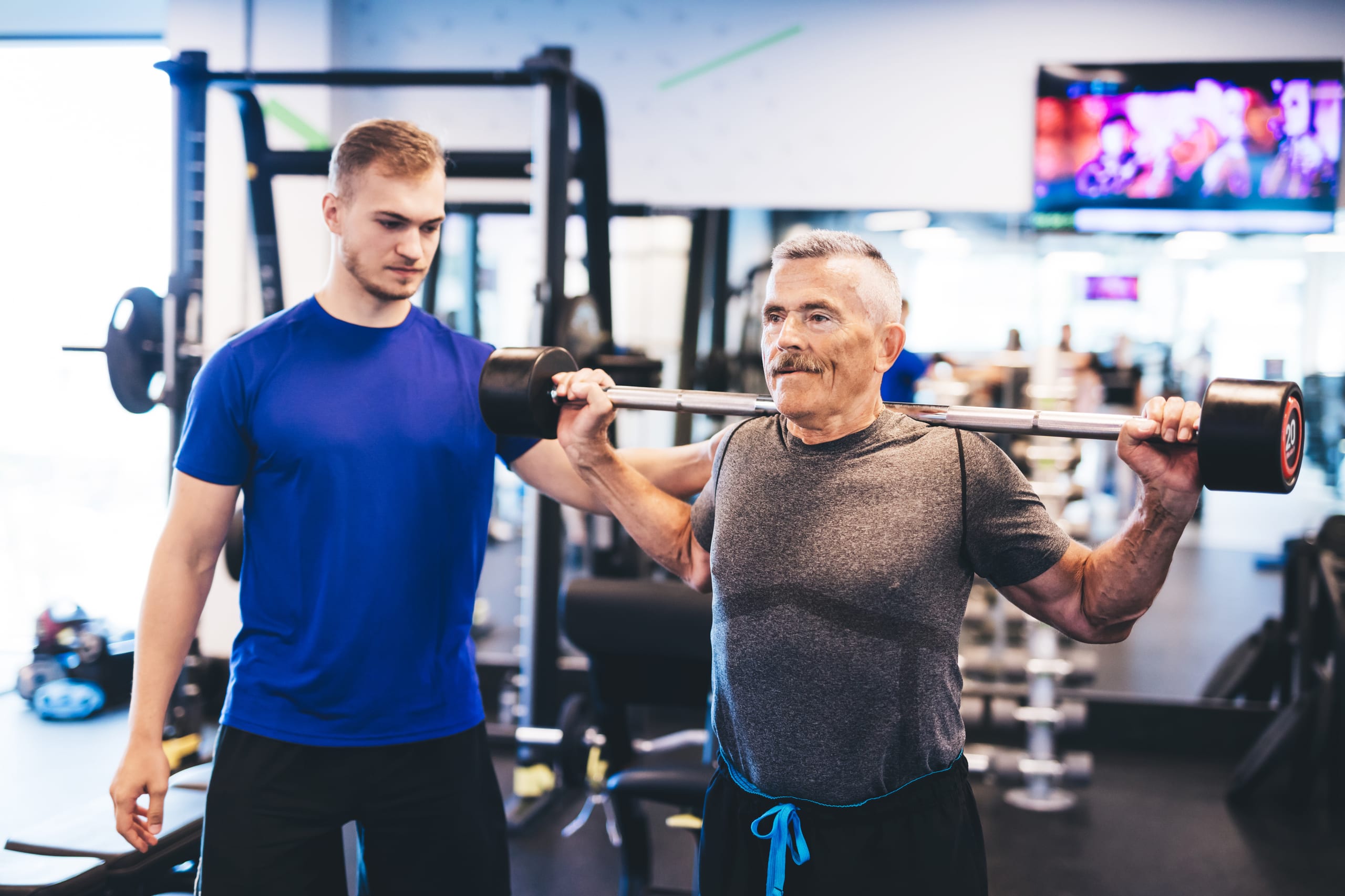
People taking the obesity drug tirzepatide lost less muscle, and got stronger rather than weaker, when they lifted weights three times a week, according to a randomized trial from Australia published in Nature Medicine.
Both groups in the 40-week trial lost almost exactly the same amount of weight, about 22.5 kilograms on average. The difference was in what that weight was made of. Those who did supervised resistance training lost 3.6 kilograms of lean tissue, against 4.7 kilograms for those who carried on with their usual activities. Their strength went the opposite way: it rose in every lift tested, while it fell in the group that did not train.
What the trial did
Researchers at the University of Western Australia in Perth enrolled 120 men and post-menopausal women aged 50 to 70 who had obesity, or were overweight with a related condition such as high blood pressure or sleep apnea. None had diabetes or heart disease. Their average age was 58, and half were women.
Everyone received weekly injections of tirzepatide, the drug sold as Mounjaro and Zepbound, working up to the top dose of 15 milligrams if they could tolerate it. Half were randomly assigned to three supervised, progressively harder weight-training sessions a week, led by exercise physiologists. The other half kept up their normal routine but had the same amount of contact with study staff, so that attention alone would not explain any difference.
Participants attended 91 per cent of their training sessions, and 93 per cent of all participants completed the trial. Body composition was measured with whole-body DXA scans every eight weeks.
The results
- Weight: down 22.6 kg on the drug alone and 22.3 kg with training, no meaningful difference.
- Fat: down about 17 to 18 kg in both groups. Weight training did not add to fat loss.
- Lean tissue: down 4.7 kg on the drug alone and 3.6 kg with training, a difference of 1.1 kg.
- Arms and legs: lean tissue in the limbs, which is mostly muscle, fell by 14 per cent on the drug alone and 11 per cent with training.
- Strength: on the drug alone, bench press fell by about 4 kg, lat pulldown by about 4 kg and knee extension by about 4 kg. With training, they rose by about 5 kg, 9 kg and 6 kg.
Blood pressure, blood sugar and cholesterol improved about equally in both groups. The authors say the drug's effects on those were so large that any extra benefit from exercise was swamped.
Why muscle matters
Drugs in this class, including semaglutide (Ozempic and Wegovy) and tirzepatide, produce weight loss of 15 to 24 per cent in trials, but a share of what is lost is lean tissue. That has raised concern for older patients, for whom muscle loss raises the risk of frailty, falls and fractures.
The authors estimate that the muscle lost by the drug-only group over 40 weeks was roughly what a middle-aged or older adult would lose to ageing over a decade or more. Weight training did not stop that loss, but it reduced it by about a quarter and turned a decline in strength into a gain. Strength relative to body weight, which reflects how easily a person can move, held steady on the drug alone and improved markedly with training.
Most participants did not notice the difference themselves: only about 15 per cent in each group reported feeling weak or lethargic, even though the drug-only group measurably lost strength.
Limits
The trial was run at a single centre, and the training was supervised, personalized and done in groups, which is more support than most patients prescribed these drugs will get. DXA scans measure lean tissue, not muscle directly; the authors estimate muscle as roughly half of total lean tissue and 70 per cent of limb lean tissue. People with diabetes or heart disease, who make up a large share of those prescribed these drugs, were excluded, and there was no placebo group because the drug's effects are already well established.
Eli Lilly, which makes tirzepatide, supplied the drug and reviewed the protocol and a draft of the paper, but the authors say it did not fund or run the trial and made no changes to the manuscript. Several authors have received speaker fees from Lilly and other drug makers. The work was also supported by a Western Australian government research award.
In Canada
Tirzepatide is approved in Canada for type 2 diabetes as Mounjaro, and for chronic weight management as Zepbound. Health Canada also approved Lilly's weight-loss pill, orforglipron, this month. B.C.'s PharmaCare program does not cover these drugs for weight loss alone; the province is reviewing Zepbound for obstructive sleep apnea in adults with obesity.
The authors' conclusion is that resistance training "should be considered when prescribing incretin mimetics as anti-obesity therapy."
Source: Green, D. J. et al., "Resistance exercise to attenuate lean mass loss during tirzepatide therapy for obesity: a randomized controlled trial," Nature Medicine, Nov. 9, 2026 (doi:10.1038/s41591-026-04752-5); trial registration ACTRN12623001236684. Canadian approval and coverage: Eli Lilly Canada; B.C. Ministry of Health.