Two northern resident orcas stay in a basin near Prince Rupert after rescuers' family calls fail to lure them under a bridge

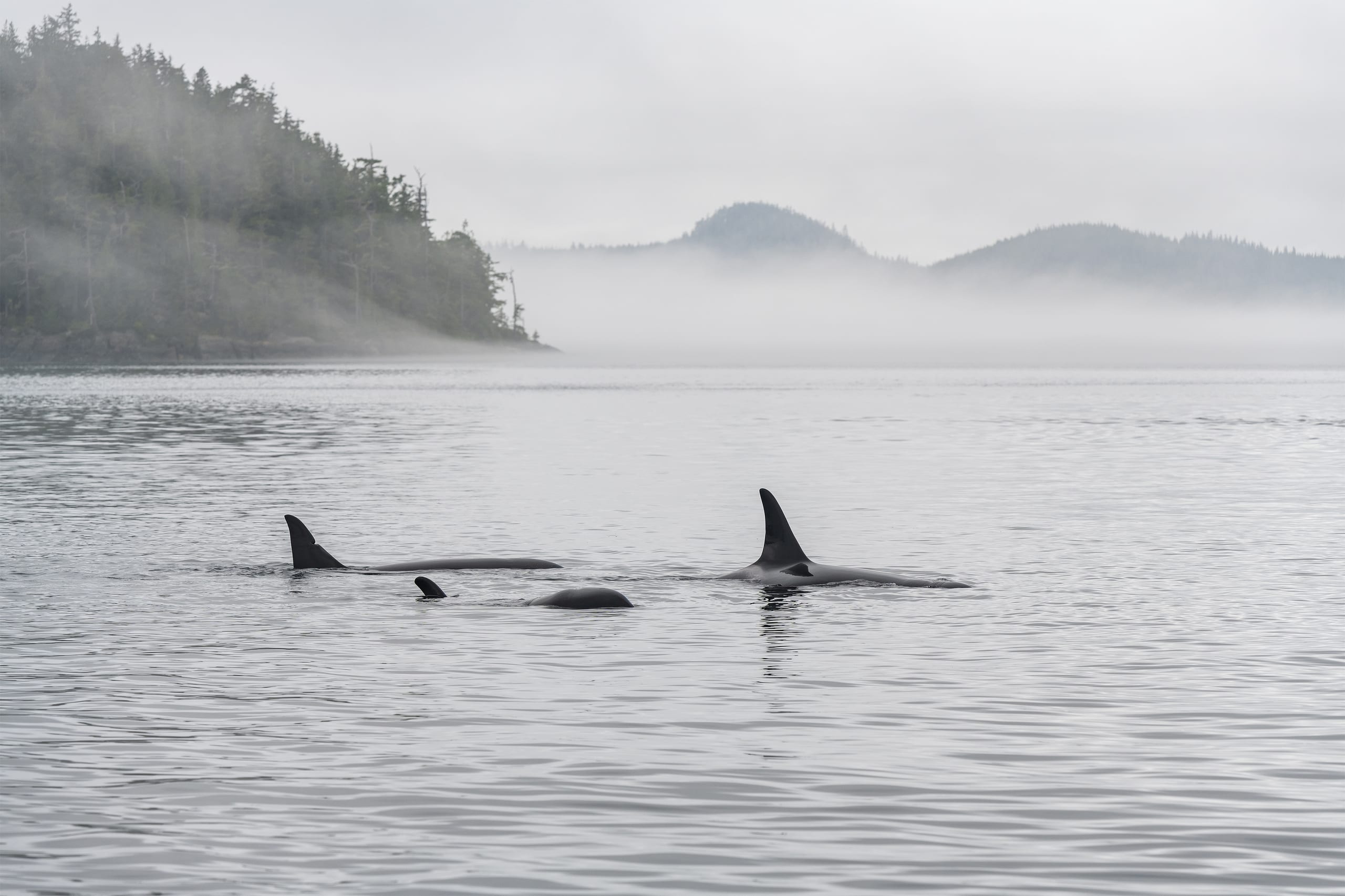
Two northern resident killer whales have spent at least 11 days in Wainwright Basin, a shallow industrial inlet near Port Edward, south of Prince Rupert. After several days of trying to coax them out, the team working with them has stopped for now to let the whales recover from the stress.
The whales are A85, a 21-year-old female known as "Cordero," and her seven-year-old son, A121, known as "Twilight." Metlakatla Aquatic Resources, which manages marine resources for Metlakatla First Nation, said in a Nov. 22 update that they had been in the basin "for the past several weeks." Fisheries and Oceans Canada (DFO) has said they have been there since at least Nov. 15.
Calls from their own family
A coordinated effort to move them began on Nov. 20. DFO is leading it, working with Metlakatla First Nation, Lax Kw'alaams First Nation, the Alert Bay research group Bay Cetology and Ocean Wise. The RCMP, CN Rail, the Prince Rupert Port Authority and Storey's Excavating suspended operations and managed traffic to keep disturbance down, according to Metlakatla Aquatic Resources.
Crews used "playback calls": recordings of other whales from the pair's own pod. Northern residents have family dialects that researchers have catalogued for decades. Taylor Lehnhart, DFO's acting marine mammal coordinator, told CBC News the whales "responded very positively and energetically" and swam straight for an exit. "Unfortunately, when they hit the bridge, they were unwilling to go under it, even though they had the ability to, and turned back around," he said. The basin has a bridge over a narrow channel at each end.
"Encouraging wild killer whales to pass through narrow and shallow tidal channels under bridges is not an easy task," Bay Cetology wrote on Nov. 22. It said the work requires "customized tools, logistics planning, patience, timing, finesse, and most importantly, accurate interpretation of orca health and behaviours." It said the whales "will be monitored regularly until they leave or another intervention is planned."
DFO says it is not certain whether the pair is trapped or staying by choice. Lehnhart said they are keeping to one part of the basin, resting at the surface with some longer dives. The two are normally seen with another male, A61, Bay Cetology research technician Gary Sutton told CBC. He said that was the first sign something was wrong.
What the public is asked to do
Metlakatla Aquatic Resources has asked recreational boaters and non-essential vessels to stay out of Wainwright Basin. It also noted that federal rules restrict flying drones over or near killer whales without authorization. Northern resident killer whales are listed as threatened under the federal Species at Risk Act.
A recent precedent
The closest recent case on the B.C. coast took more than a month to resolve. In March 2024, a Bigg's killer whale calf was left alone in a lagoon at Little Espinosa Inlet, near Zeballos on northwest Vancouver Island, after her pregnant mother stranded and died. The Ehattesaht First Nation named the calf kwiisahiʔis, or "Brave Little Hunter." Repeated attempts to guide her out did not work. On April 26, 2024, she left on her own at high tide, swimming under the bridge and out the inlet.
Sutton told CBC that Cordero and Twilight "do know where the exit points are." He said the plan for now is "a sit and wait."
Sources: Metlakatla Aquatic Resources update, Nov. 22, 2026; Bay Cetology update, Nov. 22, 2026; Fisheries and Oceans Canada and Bay Cetology comments to CBC News, Nov. 25, 2026; Ehattesaht First Nation and DFO statements on the Little Espinosa Inlet calf, April 2024.