HIV vaccine work posts its best results yet as a US$40 prevention shot rolls out abroad, but in Canada the injection isn't publicly funded

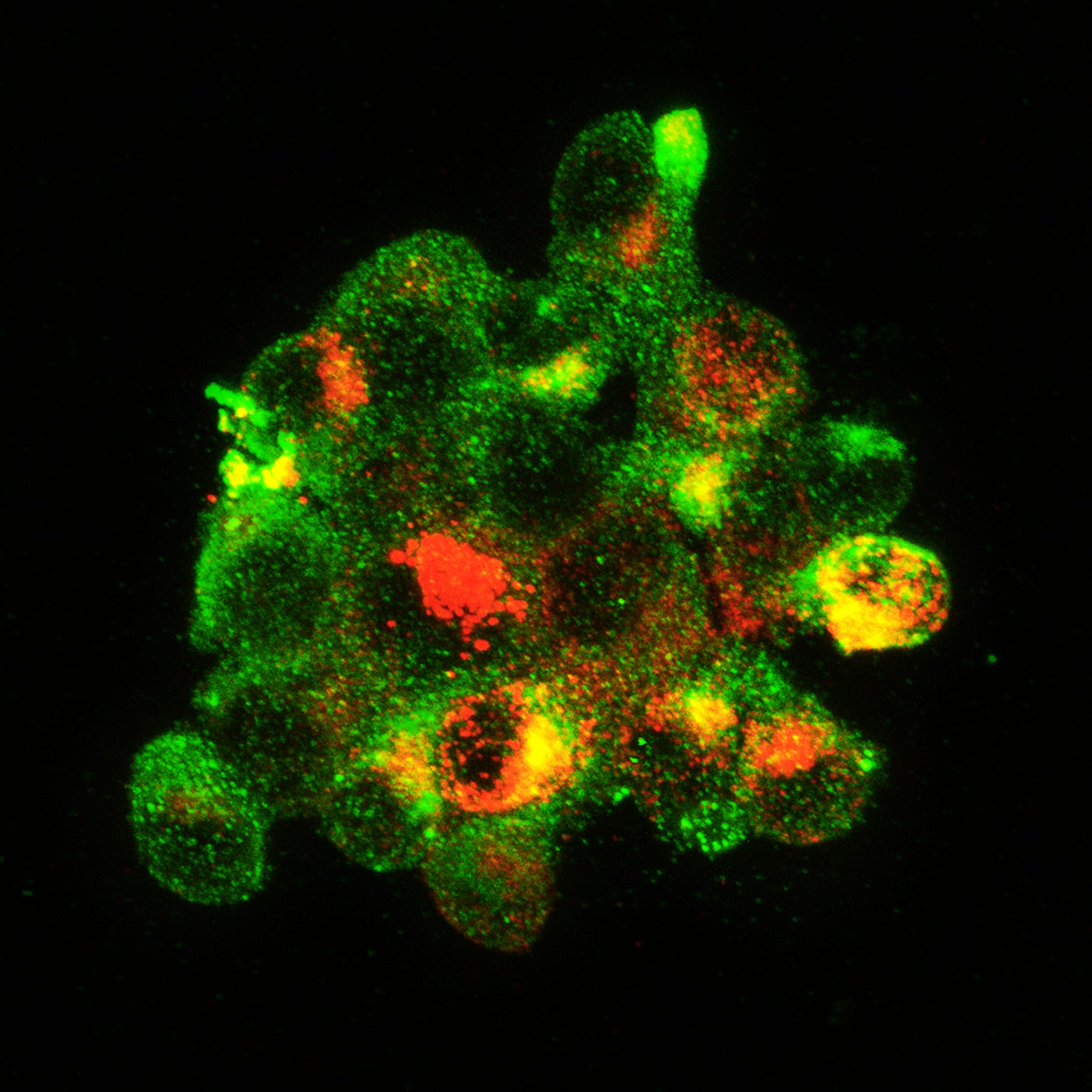
Two developments in HIV prevention are arriving together. Researchers say a vaccine that can block many HIV strains is closer than at any point in four decades of trying. And a generic version of lenacapavir, a twice-yearly injection that prevents HIV infection, has been cleared for production at a price of US$40 a year for people in 120 low- and middle-income countries.
Canada is not one of those countries. Health Canada approved Gilead Sciences' brand-name version in April, but the shot is not yet covered by public drug plans, and British Columbia's free PrEP program still relies on daily pills.
Training the immune system to find rare antibodies
A news feature and an editorial published Wednesday in Nature describe the vaccine research. Scientists have long known that a small number of people living with HIV produce "broadly neutralizing antibodies," which can stop infection by a wide range of HIV strains. One of the strongest sets ever found came from a woman in South Africa's KwaZulu-Natal province, known in the research literature as CAP256.
Earlier HIV vaccines tried to provoke antibodies against a single version of the virus's surface protein and failed in clinical trials, because so many strains circulate at once. The newer approach, called germline targeting, uses a series of shots. The first wakes up the rare immune cells that are capable of producing broadly neutralizing antibodies, and later doses with different versions of the viral protein push those cells to refine their antibodies over time.
This year, several research teams reported in Nature that the strategy produced broadly neutralizing antibodies in monkeys. "No one has achieved that before. It's a very important milestone," Rogier Sanders, a virologist at Amsterdam University Medical Centre, told the journal. In small human trials of a priming vaccine called eOD-GT8, nearly all participants developed precursors of these antibodies, and a booster improved them further.
"We have a line of sight to an efficacious vaccine," said Mark Feinberg, head of the International AIDS Vaccine Initiative.
The researchers stress that the work is far from finished. The Nature editorial says it could take more than a decade to turn these results into an effective vaccine. Cuts to U.S. government funding have also hit the field: the U.S. National Institutes of Health ended a preclinical HIV vaccine program last year, and a vaccine trial in South Africa was postponed and scaled back.
A US$40 shot abroad, a US$28,000 one in the U.S.
Lenacapavir is already here. Given as an injection under the skin every six months, it was more than 99.9 per cent effective at preventing HIV infection in clinical trials, according to CATIE, Canada's HIV information service. Because people don't have to remember a daily pill, it outperformed oral PrEP in the trials.
The U.S. Food and Drug Administration this month gave tentative approval to a generic version made by India's Dr. Reddy's Laboratories, under a licensing deal that lets six manufacturers sell lenacapavir in 120 low- and middle-income countries. The Gates Foundation's Institute for Disease Modelling estimates that giving the drug to just 5 per cent of the African adults most likely to acquire HIV could cut new infections there by about a third, the Nature editorial notes.
In the United States, where the generic can't be sold while Gilead's patent is in force, the brand-name shot, Yeztugo, lists at US$28,218 a year before insurance.
Approved in Canada, not yet funded
In Canada, the same drug is sold as Yeytuo. Health Canada approved it in April 2026 for HIV prevention in adults and adolescents weighing at least 35 kilograms. CATIE says Gilead is negotiating with private insurers and with federal, provincial and territorial governments over the price, and that such negotiations can take a year or more.
B.C. pays for PrEP through the BC Centre for Excellence in HIV/AIDS, which provides it free to residents at risk of HIV. The centre's guidelines, last revised in March, cover daily oral pills. They list the other long-acting injection already approved in Canada, cabotegravir (Apretude), as "non-formulary," meaning the program doesn't fund it. The guidelines were written before lenacapavir was approved and do not mention it.
Canada still has thousands of new infections each year. The Public Health Agency of Canada reported 2,288 first-time HIV diagnoses in 2024, a rate of 5.5 per 100,000 people. That was slightly lower than 2023 but still above the pre-pandemic rate of 4.6 in 2019.
Sources: Ewen Callaway, "A powerful HIV vaccine is finally within reach — thanks to these super antibodies," Nature, Nov. 25, 2026 (doi:10.1038/d41586-026-03718-4); "The world has a golden chance to improve HIV prevention: don't squander it," Nature editorial, Nov. 25, 2026 (doi:10.1038/d41586-026-03809-2); CATIE, "Lenacapavir (Yeytuo) injected every six months approved for HIV prevention in Canada"; BC Centre for Excellence in HIV/AIDS, PrEP guidelines (March 6, 2026); Public Health Agency of Canada, HIV in Canada, Surveillance Report to December 31, 2024; CBC News.