A week after a CN derailment into the Skeena, up to 10,000 litres of locomotive diesel remain unaccounted for

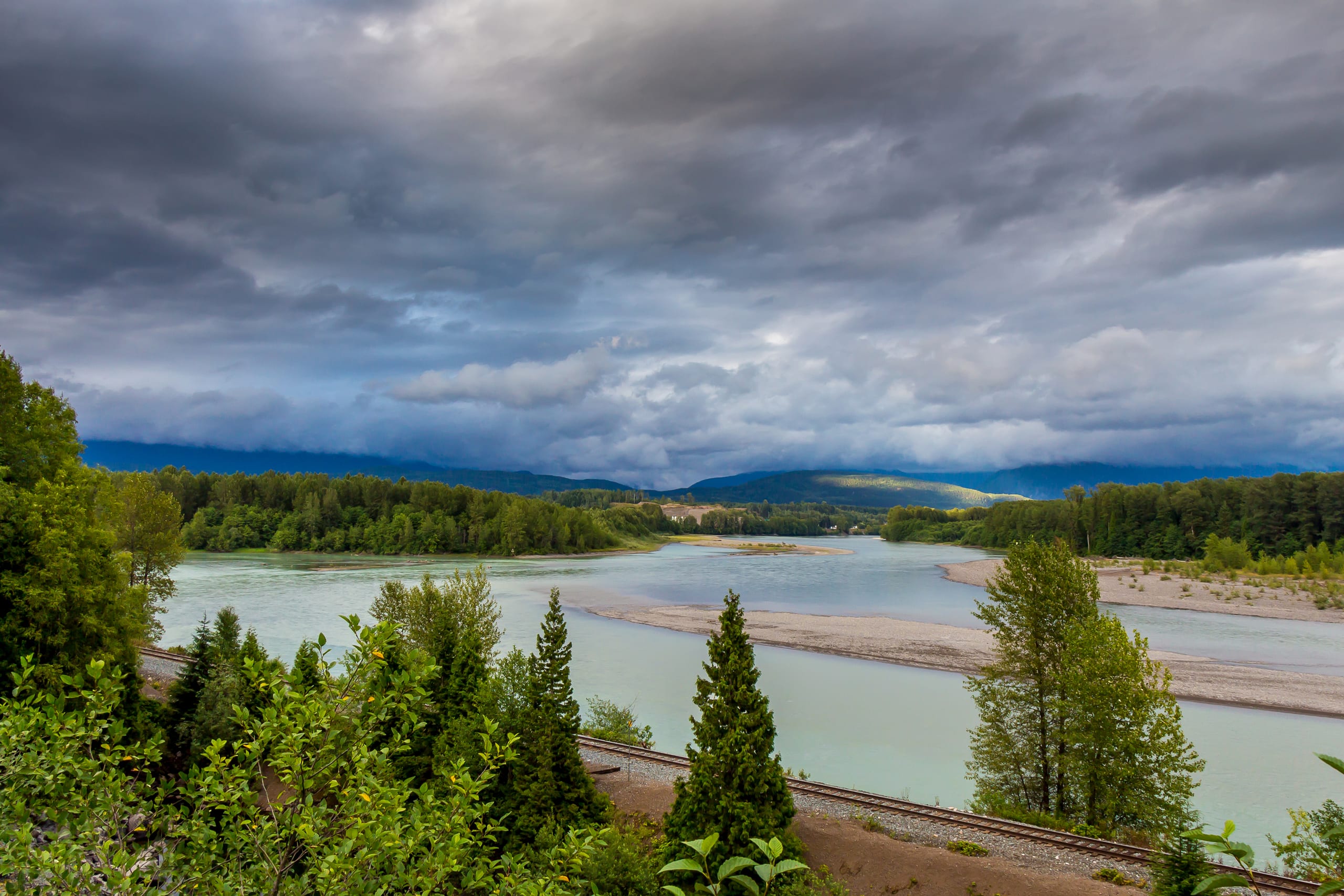
A week after a CN Rail freight train derailed into the Skeena River west of Terrace, the amount of diesel that reached the river is still unknown, according to the province's spill-response record.
CN has told the B.C. Ministry of Environment and Parks that the locomotive held up to 11,600 litres of diesel and that about 1,400 litres have been recovered from it. That leaves up to about 10,000 litres not accounted for. "The quantity of diesel released to the environment remains unconfirmed," the ministry wrote in its latest update, posted Nov. 23.
What happened
The train derailed at about 1:10 p.m. on Nov. 17, roughly 15 to 16 kilometres west of Terrace. CN said two locomotives and five rail cars left the track, and that a rock slide appeared to be the cause. Two crew members were taken to hospital in serious but stable condition and have since been released.
The ministry's record shows how the picture changed over the first week:
- Nov. 17: CN reported the train was carrying dry plastics and that oil was leaking. Part of Highway 16 was closed.
- Nov. 18: A ministry response officer found that the locomotive and several rail cars appeared to be in or at risk of entering the river, with an oil sheen stretching about 1.3 kilometres downstream.
- Nov. 19: The spilled product was identified as diesel from the locomotive. CN corrected its cargo report: the cars were carrying paper pulp, not plastics. The ministry asked CN for an estimate of how much diesel had spilled. CN said the track had been repaired and trains were running again.
- Nov. 23: Debris and rail cars were still on the bank and in the river, and the locomotive was being cut into pieces for removal. Intermittent sheen was seen for about two kilometres downstream. A boom was across the river, with more added while the locomotive was cut up.
Province orders a formal response structure
The ministry has issued CN a Spill Response Actions Order. It requires the railway to set up a unified command and an environmental unit to coordinate the cleanup and environmental assessment. Under B.C. law, the party responsible for a spill must clean it up, with the ministry overseeing the work.
CN has hired the consulting firm GHD, which drafted a water sampling plan, and was bringing in a specialist this week to survey and document oiled shoreline.
The province lists Kitsumkalum First Nation and the Metlakatla Stewardship Society among those involved in the response, along with Transport Canada, Environment and Climate Change Canada and the Terrace Fire Department.
The second locomotive spill on the line this year
The rail line along the Skeena carries freight to and from the Port of Prince Rupert. On March 16, a mudslide caused by heavy rain derailed a locomotive and 27 empty grain cars about 20 kilometres south of Prince Rupert, leaving nine cars in the intertidal zone. The province's record for that spill shows the first estimate was about 1,000 litres of diesel. Nine days later, the estimate was 7,949 litres released, with 4,529 litres recovered and about 3,421 litres never accounted for.
After the Terrace derailment, the Gitxsan Huwilp Government called for all train hauling in its territories and fishing waters to stop. "The hauling of any materials — dangerous, human or otherwise — must stop immediately until CN Rail can guarantee the rail line is safe," hereditary chief Toby Howard said, according to The Canadian Press.
The ministry says it will keep staff on site and post further updates.
Sources: B.C. Ministry of Environment and Parks, spill incident records "Train Derailment Terrace" (DGIR 264313, updated Nov. 23, 2026) and "Train Derailment Prince Rupert" (DGIR 260965, updated April 9, 2026); CN statements reported by CP24 and The Canadian Press.