Thompson River steelhead test fishery caught zero fish for the first time in 40 years, State of Salmon report finds

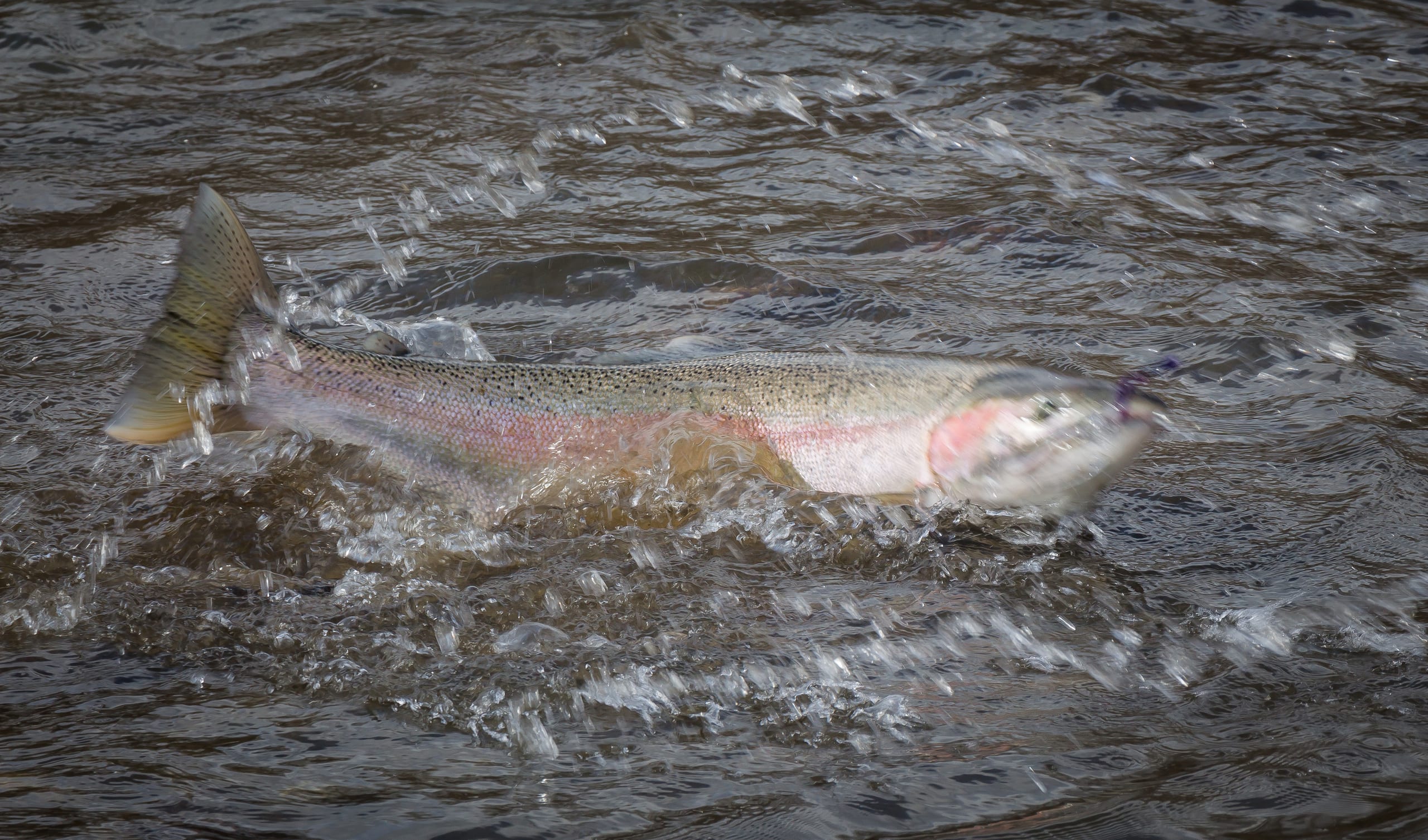
Last fall, for the first time in its 40-year history, the test fishery that counts Thompson River summer steelhead caught nothing. In the Canadian part of the Columbia River, only one steelhead spawner was recorded all year.
Those two numbers sit at the centre of the Pacific Salmon Foundation's State of Salmon 2026 report. It finds steelhead in worse shape than any other Pacific salmon in British Columbia and the Yukon, even as sockeye, pink and some southern coho runs have improved.
The Vancouver-based charity's report, its third annual edition, pulls together spawning counts from First Nations, federal and provincial agencies and the Pacific Salmon Commission. It covers six species, including steelhead, across 10 regions. Each population's recent abundance is compared with its long-term average. Overall, about half of the populations are below that average, which the foundation calls "a reason for cautious optimism" after three years of small gains.
Steelhead: below average almost everywhere
Steelhead are the sea-going form of rainbow trout. According to the report, they now have the lowest abundance of the six species and are below their long-term spawning average in every region except the Nass.
The Interior Fraser populations, the summer steelhead of the Thompson and Chilcotin rivers, face "imminent risk of extinction," the report says. Both are assessed as Endangered by the Committee on the Status of Endangered Wildlife in Canada. In the Fraser, both the short-term and long-term trends are negative.
The Columbia is rated "critically low," and West Vancouver Island shows "steep declines" in steelhead along with chum and coho. In-season reports suggest the Skeena's 2026 steelhead return may be better, the foundation says, but "significant concerns remain."
The true picture may be worse than the counts show. There were no steelhead abundance data at all for Haida Gwaii or the Central Coast, so their status is listed as unknown. The foundation also cites its own research suggesting that angler catch records, which are used to track many steelhead runs, may understate the declines. "Many steelhead populations may be disappearing, unrecorded," the report says.
Chum: the steepest declines
Chum salmon have had "the most precipitous declines of any species," the report says. Their spawning numbers are below the long-term average in every region except the Nass. In the Skeena, Chinook and chum have both "declined dramatically," and chum are also struggling on the Central Coast and in Haida Gwaii.
Where salmon are doing better
Sockeye spawning numbers were above average in every region except East Vancouver Island and the Mainland Inlets, helped by strong 2025 returns. The 2025 Fraser sockeye run beat its forecast by several million fish. Pink salmon are well above average in most regions.
Coho show a north-south split. In the Fraser and on East Vancouver Island, coho are thriving, which the report attributes to strong survival at sea and better productivity in the Strait of Georgia. Farther north, from Haida Gwaii to the northern transboundary rivers, most coho populations remain near or below average.
Some Chinook runs are recovering in the south. On the Cowichan River, returns have reached record highs after falling to about 500 natural spawners in 2009. The report points to the Cowichan, and to Columbia sockeye's return from near-extirpation to record runs by 2022, as examples of what coordinated, watershed-level recovery can achieve.
A warning about 2026
The report covers data up to 2025. It warns against reading too much into one good year, because the 2026 Fraser sockeye return was much lower than expected. This was due to be a "dominant" year in the river's four-year cycle, but the fish did not come back as projected. That raises questions, the foundation says, "about what happened to the four-year-old fish" and adds to concerns for the critically endangered Early Stuart sockeye. It also notes that a strong El Niño now developing in the Pacific makes the coming years harder to predict.
The report also shows how gains in total numbers can hide losses within a river system. Upper Fraser Chinook, which spend longer in fresh water, now make up a smaller share of Fraser Chinook returns.
"No longer fit for their purpose"
This year's edition adds two new sections. One looks at six human-caused pressures on salmon: climate change, aquaculture, fisheries, hatcheries, industrial development and urban development. The report names climate change as the biggest threat. On aquaculture, it notes that Ottawa has committed to ending open net-pen salmon farming in B.C. waters by June 2029.
The other new section is a "Path Forward," and it is blunt. "The institutional systems responsible for managing and protecting wild Pacific salmon in British Columbia are no longer fit for their purpose," it says. It notes that the monitoring and action promised in Fisheries and Oceans Canada's 2005 Wild Salmon Policy remain largely unrealized more than 20 years later. It says the same of much of the 2018 roadmap from B.C.'s Wild Salmon Advisory Council.
"What has been missing is implementation, coordination, and accountability at the scale required to reverse declines," the foundation writes. It calls for recovery planning to be organized by watershed and shared among Crown governments, First Nations and local stewardship groups.
Source: Pacific Salmon Foundation, State of Salmon 2026 Report (full report and online data, released November 2026).