The last piece of the ice sheet that once buried Canada began regrowing 2,000 years ago until warming reversed it, Baffin Island study finds

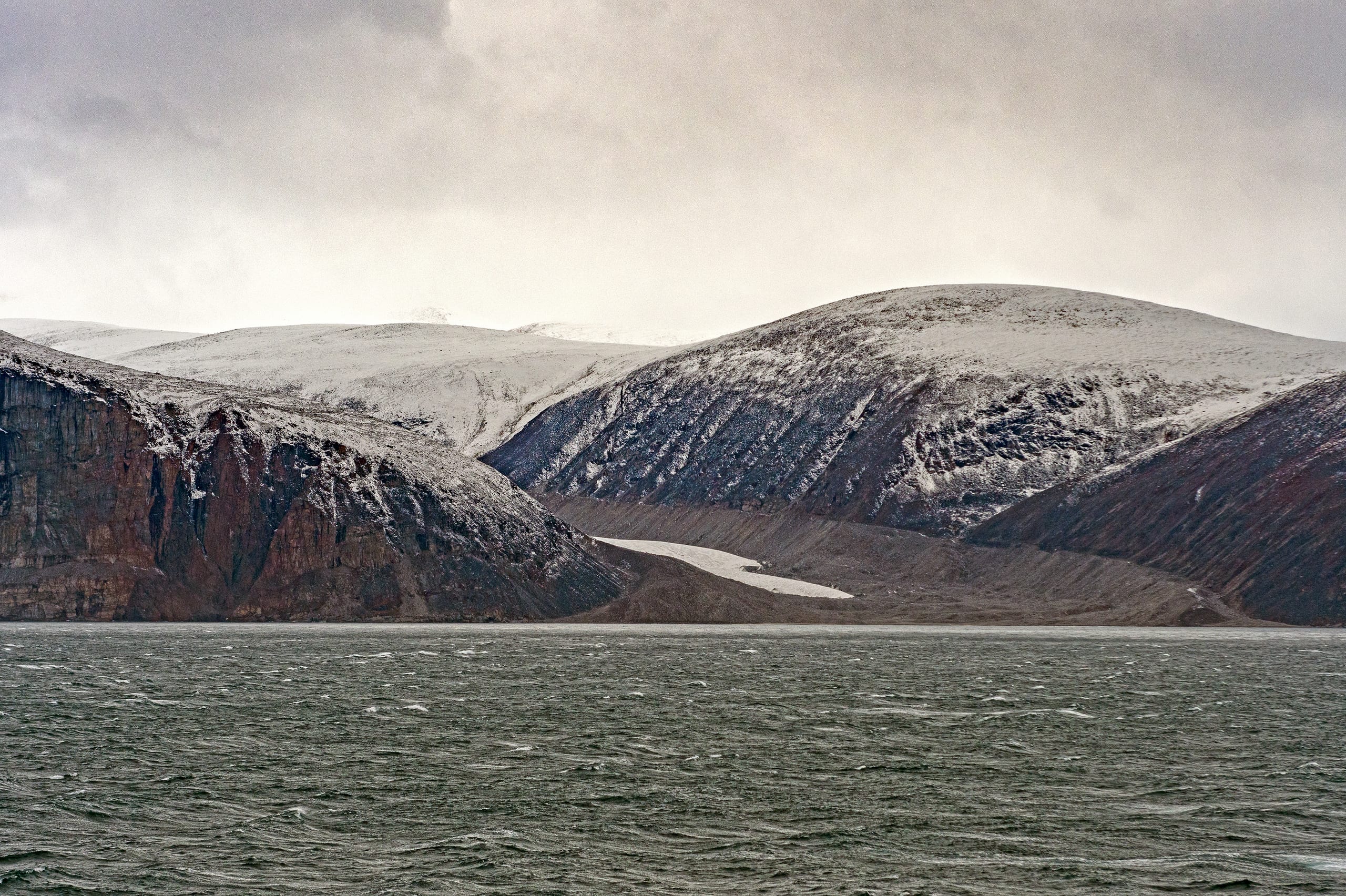
The last surviving piece of the ice sheet that once buried most of Canada stopped shrinking about 2,000 years ago and began to grow again, until warming summers reversed it around 1960. That is the finding of a study of the Barnes Ice Cap on Baffin Island, Nunavut, published in the journal Science. Its authors argue that the regrowth was the first stage of the planet's next glacial period, and that human-caused warming ended it.
The study, led by geochemist Nicolás Young of Columbia University's Lamont-Doherty Earth Observatory, has been circulating widely this week under headlines saying the next ice age "may have already begun." The evidence behind that claim is narrower and more interesting than the headlines suggest. Much of it comes from moss that was buried alive by advancing ice and is now melting back out.
A remnant of the Laurentide
The Laurentide Ice Sheet covered much of Canada and the northern United States during the last glacial period, at points more than three kilometres thick. Most of it melted after the period ended about 11,700 years ago, but not all. The Barnes Ice Cap, on central Baffin Island, is its last remnant.
The Laurentide grew and shrank many times over the past 2.6 million years. In warm periods like the present one, it retreated into Arctic Canada and reached a minimum size. The authors treat the moment it starts growing again from that minimum as the start of the next glaciation.
According to the paper's abstract, the Barnes Ice Cap reached its smallest size some time after about 3,600 years ago. It began expanding again about 2,000 years ago and reached its largest late extent around 1960. After that, summer melt began to outpace winter snowfall, and the edges have been retreating since.
How dead moss dates the ice
Unlike most glaciers, the Barnes Ice Cap is frozen to the bedrock beneath it. It does not scrape across the land as it grows. It flows over plants and seals them in place. As the ice retreats, those plants reappear still in the position they grew in, and radiocarbon dating shows when they died, which is when the ice covered them.
The team has archived part of this evidence with the U.S. National Science Foundation's Arctic Data Center. That data set lists 91 samples of dead vegetation collected in 2022 between the ice cap's current edge and the "trimline" marking its 1960 maximum. Most are mosses, chiefly the genus Polytrichum, along with a few sprigs of willow, Arctic white heather, mountain avens and grass. Most were picked at or near the ice edge, many within a few metres of it. Others were collected along transects up to about 770 metres inside the trimline.
Their radiocarbon ages run from under a century to about 1,050 years, and the oldest samples generally come from farther inside the 1960 line. That pattern is what an advancing ice margin would produce. These samples cover only the most recent part of the record. The case for regrowth starting about 2,000 years ago, and for the minimum before it, also draws on plants exposed beneath smaller ice caps nearby that have recently melted away entirely. The paper's acknowledgments show the team also used beryllium-10 measurements, a method for dating how long rock has been exposed to the sky.
The method has a track record on Baffin Island. Gifford Miller of the University of Colorado Boulder, a co-author, has used radiocarbon dates on ice-killed moss for years to reconstruct when snowlines dropped and small ice caps expanded in Arctic Canada over the past 2,000 years.
What "the next ice age began" means here
The headline claim rests partly on a definition. Climate models have generally put the next glaciation thousands to tens of thousands of years away, and some find that today's greenhouse gas levels could postpone it far longer. Those models typically look for the start of large-scale ice growth across the continents. Young's team instead marks the start as the first sustained regrowth of the existing ice sheet, a much earlier and smaller signal.
By that standard, the regrowth was barely under way when it stopped. In Columbia's release, Young said it would have taken thousands of years for the cooling to become noticeable, and about 30,000 years for the Laurentide to return to continental size.
The physics behind the timing is not in dispute. Over the past several thousand years, the amount of summer sunshine reaching high northern latitudes has been slowly falling because of cyclical changes in Earth's orbit. That trend favours glacier growth and is still continuing. The study's point is that Barnes began losing ice around 1960 even though the orbital trend still favoured growth. In the paper's words, the reversal "despite the ongoing decline in summer insolation, illustrates the influence of anomalous greenhouse gas forcing on climate."
In an accompanying Perspective in Science, University of Wisconsin–Madison geoscientist Shaun Marcott wrote that the glacier "began to grow 2000 years ago but started losing ice by 1960," likely signalling the end of the next ice age.
The end of the Laurentide
The researchers also see a longer-term consequence. Model projections cited in the release suggest the Barnes Ice Cap could disappear entirely within a few centuries. "That will be the true very last remains of the Laurentide, disappearing for good," Young said.
That matters for future glacial cycles. Existing ice helps more ice form: it reflects sunlight and keeps the surface cold. In past cycles, the Laurentide remnant gave new glaciation a starting point. Without it, a future ice sheet would have to build from bare ground, and the researchers say they cannot yet tell when that might happen with greenhouse gas levels this high.
The fieldwork was carried out on Qikiqtaani Inuit land under a permit from the Nunavut Research Institute.
Source: Young, N.E., Miller, G.H., Raynolds, M., et al., "Late Holocene reexpansion of the Laurentide Ice Sheet," Science 394 (2026), 455–459, doi:10.1126/science.aed3379; Marcott, S.A., "Has the next ice age already come and gone?" Science (2026), doi:10.1126/science.aem3295; Miller, G. et al., "Radiocarbon ages of entombed vegetation around the Barnes Ice Cap," NSF Arctic Data Center (2026), doi:10.18739/A2QR4NS8T; Columbia Climate School news release, Oct. 22, 2026. The full text of the Science paper is behind a paywall; this article draws on its abstract, the journal's editor's summary, the public data set and the university release.