Cameras at Canadian school crosswalks catch 4.5 near misses a day, CAA study finds

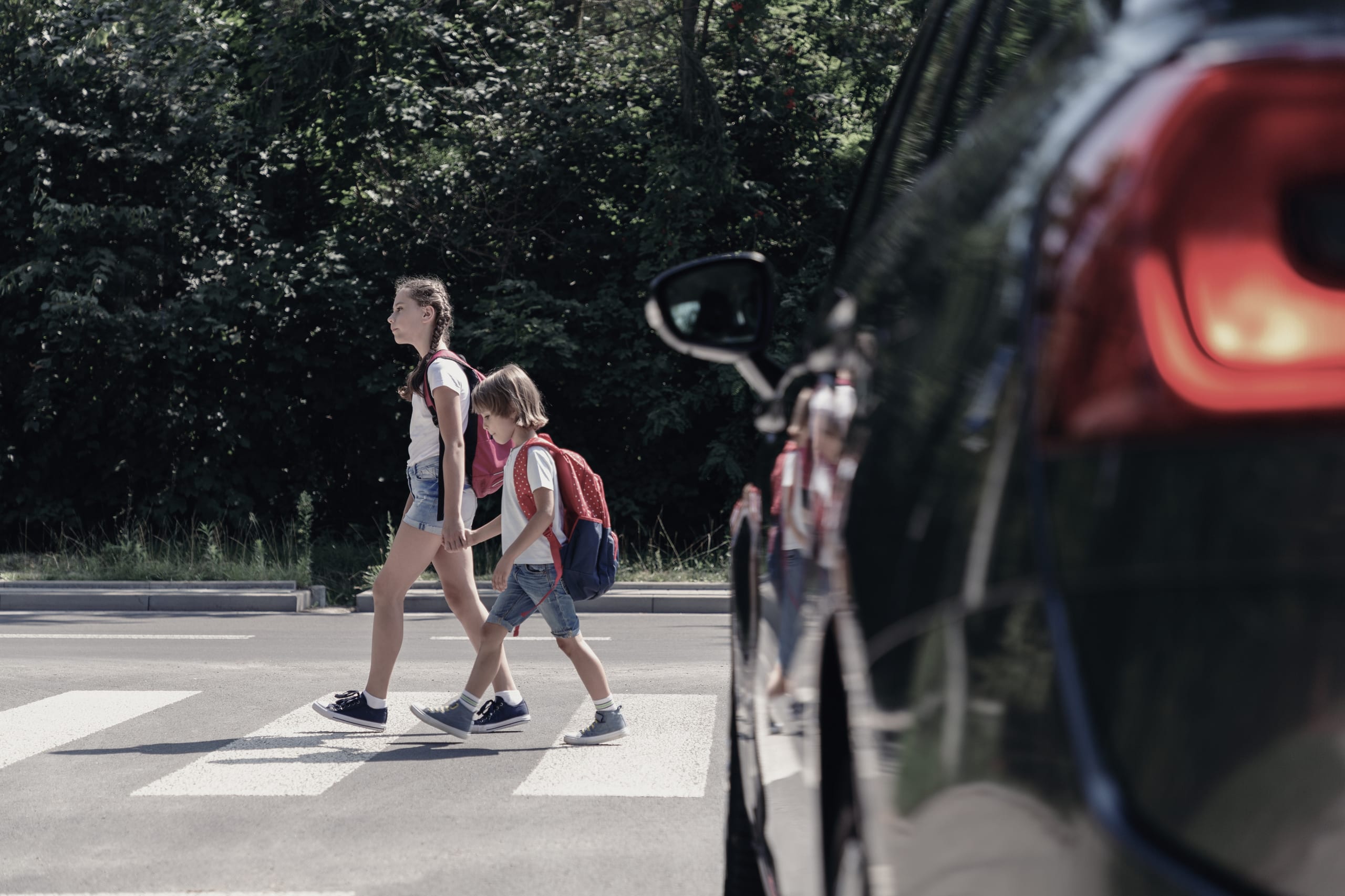
Cameras pointed at 30 crosswalks near Canadian schools recorded 660 close calls between drivers and pedestrians in roughly five school days. That works out to an average of 4.5 near misses per crossing per day. Put another way, about one in every 84 people who crossed had a near collision with a vehicle.
The figures come from a study commissioned by the Canadian Automobile Association and released Thursday by BCAA. Miovision, a traffic analytics company, and Fireseeds North Infrastructure, a Winnipeg road safety engineering firm, did the work. City staff in Vancouver, Calgary, Edmonton, Saskatoon, Regina, Winnipeg, Ottawa, Toronto, St. Catharines, Montreal and Halifax set up portable cameras at crossings on established routes to school. The cameras recorded from 7 a.m. to 7 p.m. each day.
Software then flagged every moment when a vehicle and a pedestrian passed the same point within a short enough interval that a crash would have carried a real risk of serious injury. Each event was graded from low to critical risk based on vehicle speed and the size of the gap.
A few crossings account for most of the risk
The average hides a wide spread. More than half of the sites logged one near miss a day or fewer. A handful saw far more, with the busiest reaching 25.4 a day. The typical crossing in the study handled about 377 pedestrians and 7,600 vehicles a day, and busier crossings produced more conflicts.
Most incidents fell in the medium-risk category. According to the report, a pedestrian hit in a crash of that kind has between a 5 and 40 per cent chance of serious injury. The researchers read the small number of high-risk and critical events as evidence that 30 km/h school zone limits are working. Most of the crossings studied had that limit, and the report notes that at 30 km/h the two most dangerous categories should not occur at all when drivers comply.
Nearly three-quarters of near misses (72 per cent) happened on the far side of an intersection, as vehicles were leaving it rather than entering. For turning vehicles the gap was much larger: these "hook" conflicts were 7.9 times more likely on the exit side. The authors suggest drivers may be focused on the intersection itself and pay less attention to the crosswalk they are about to drive through.
What made a crossing safer
The researchers recorded 38 features of each crossing and compared them against near-miss rates after adjusting for traffic volume. Several stood out:
- Traffic control. Crossings where through traffic normally had to stop or yield at a signal, stop sign or roundabout had conflict rates about 20 times lower than crossings protected only by crosswalk signs. Two-thirds of the sites studied had no such control.
- Zone signage. Crossings without school zone or reduced-speed-zone signs had a conflict rate 67 per cent higher than signed ones. For turning vehicles leaving an intersection, the rate was 8.6 times higher.
- Road type. Crossings on arterial roads had higher conflict rates than those on collector and local streets, even after adjusting for traffic.
- Zebra markings. Zebra-striped crosswalks had 56 per cent fewer turning-vehicle conflicts. Across all types of conflict, though, sites with zebra markings did slightly worse, and the authors say they cannot yet draw firm conclusions about the markings.
The study could not settle whether adult crossing guards reduce near misses. Guards had been placed at the busiest and riskiest crossings, which makes a simple comparison misleading, and the authors recommend a before-and-after study instead.
Danger doesn't end at the bell
The 7 to 9 a.m. and 3 to 5 p.m. windows together accounted for 242 near misses. The single worst hour, however, was 5 to 6 p.m., with 94 incidents, after most schools had let out. The researchers say schoolyards, fields and buildings stay busy into the evening, and they suggest cities consider extending reduced-speed hours. In B.C., school zones are 30 km/h from 8 a.m. to 5 p.m. on school days unless posted otherwise, while playground zones stay at 30 km/h from dawn to dusk every day.
"The research is alarming, but it also confirms the huge importance of simple things we can all do to keep school zones safer," said Linda Lawlor, associate manager of community impact at BCAA. She said slowing down and being ready to react cuts the risk of injuring someone, and that for people on foot, "always using a marked crosswalk more than halves your risk."
Recommendations, and limits
The report urges cities to keep and expand reduced-speed school zones, put up more zone signage, use more zebra markings, and plan walking routes so children cross at controlled intersections and avoid arterial roads where possible. BCAA also reminded drivers to put phones away and obey crossing guards. It asked families to use designated drop-off zones, avoid double parking and, where they can, walk or park a block or two away to ease congestion.
The authors call their findings exploratory. Thirty sites is a modest sample, the crossings were chosen by the cities rather than at random, and the statistical models built from them were not tested on outside data. The study shows associations, not proof that any one feature causes fewer near misses. The researchers have shared site-level results with the participating municipalities but did not publish them by city.
Source: Fireseeds North Infrastructure and Miovision Technologies, "Near-Misses at School Crosswalks in Canada Study," prepared for the Canadian Automobile Association, November 2026; BCAA news release via Cision, November 12, 2026.