Blood test spots early breast cancer and flags who is likely to relapse, study finds

A blood test developed by Israeli researchers picked out women with early-stage breast cancer from healthy women with high accuracy. It also flagged which patients were likely to see their cancer return, in some cases better than the clinical measures doctors now rely on. The work, led by labs at the Weizmann Institute of Science and the Hebrew University of Jerusalem, was published in Nature on Nov. 11.
The test is a form of liquid biopsy, which looks for traces of a tumour in the bloodstream. These tests are already used to guide treatment for some people with cancer. They have struggled, though, to catch disease early in otherwise healthy people. In the early stages there is very little tumour material in the blood, and pushing for sensitivity tends to produce false alarms.
Reading the bookmarks, not the book
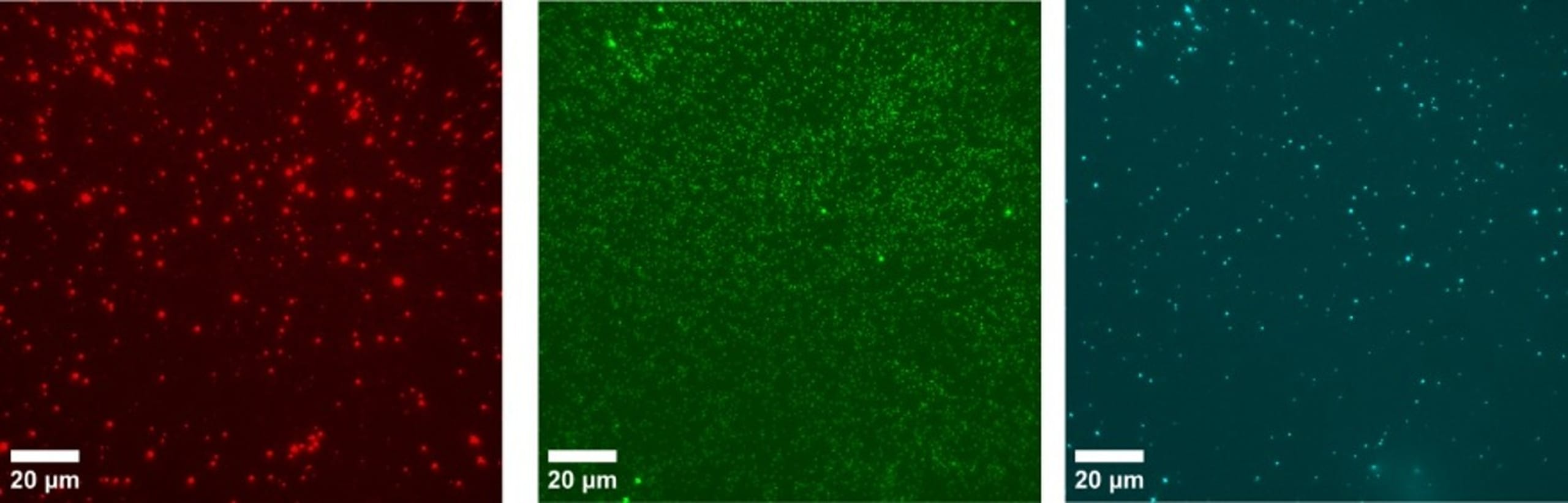
Instead of hunting for mutations, the team looked at epigenetics: chemical tags on the proteins that package DNA, which help decide which genes a cell switches on. Cells, cancer cells included, shed fragments of this packaged DNA into the blood when they die. These fragments are called nucleosomes. A technique from Prof. Efrat Shema's Weizmann lab uses single-molecule microscopy and fluorescent labels to read dozens of these tags across millions of nucleosomes in a blood sample. The same method had earlier shown promise for colorectal and pancreatic cancer.
To learn what a breast tumour's epigenetic signature looks like, the researchers first profiled tumours from 12 women at Kaplan Medical Center in Rehovot. The tissue was rushed from surgery to the lab and analysed the same day, before the tags could degrade. Prof. Guy Ron's physics group at the Hebrew University built the computational models used to find patterns in the data. Dr. Noa Furth, Dr. Christina Riemenschneider and Yishai Arieli are the paper's lead authors.
Detection results
The team then tested blood drawn from 77 breast cancer patients who had been followed for at least five years at the Mayo Clinic in Florida, plus 30 healthy women. Machine-learning models told the two groups apart with 95 per cent accuracy, including tumours still confined to the breast and no larger than two centimetres. Performance held up regardless of breast density, which can hide tumours on mammograms. It also held across breast cancer subtypes. When the researchers pooled 188 patient samples from Mayo, Sheba and Kaplan, a model trained on three-quarters of the data correctly classified the rest with similar accuracy (an area-under-the-curve score of 0.96).
A hidden population of aggressive cells
Early-stage breast cancer that appears successfully treated still comes back in 20 to 40 per cent of cases. The study offers one possible reason. Even in the most common, hormone-sensitive "luminal" tumours, which are usually considered less aggressive, the researchers found a small population of cells resembling the more dangerous basal-like subtype. These cells carried a consistent epigenetic signature across patients, with switched-on aggressive traits and dampened hormone-receptor signalling.
The difference appears to be epigenetic rather than genetic. When the team grew breast cancer models in the lab starting from non-aggressive cells, an aggressive population always emerged eventually.
The more of that signature that showed up in a patient's blood, the higher the chance her cancer returned. Using it along with other epigenetic markers, the model separated patients who relapsed from those who stayed disease-free with an accuracy score of 0.81. That beat predictions based on tumour stage, grade and subtype. In a second, smaller group of 30 Mayo patients the score was 0.92. Among patients who also had Oncotype DX results, a widely used gene-expression test run on tumour tissue, those scores did not differ between women who relapsed and women who did not. The blood test did separate them, and it flagged risk in some patients that conventional measures had rated low risk.
"Evidence is mounting that cancer cells exploit their epigenetic flexibility to change their behavior, become more aggressive and evade treatment," Shema said. Her group is now looking for drugs that could take away that flexibility, or push aggressive cells back toward a milder state.
Still a research tool
The test is not available to patients. The study groups were small: tens of healthy controls and, for the recurrence analysis, a few dozen women who relapsed. The samples were also analysed after the fact rather than in a forward-looking trial. The work concentrated mainly on luminal breast cancer, although the authors report similar detection performance in a smaller set of triple-negative cases. Larger prospective studies would be needed before the approach could be used for screening or to guide treatment decisions.
Source: Furth, N., Riemenschneider, C., Arieli, Y. et al., "Epigenetic heterogeneity in breast tumours informs diagnosis and prognosis," Nature (2026), doi:10.1038/s41586-026-11230-y; Hebrew University of Jerusalem news release.