More than a quarter of B.C. Grade 4 students start the year below expectations in reading, and the new government's mandate letter gives one line to literacy

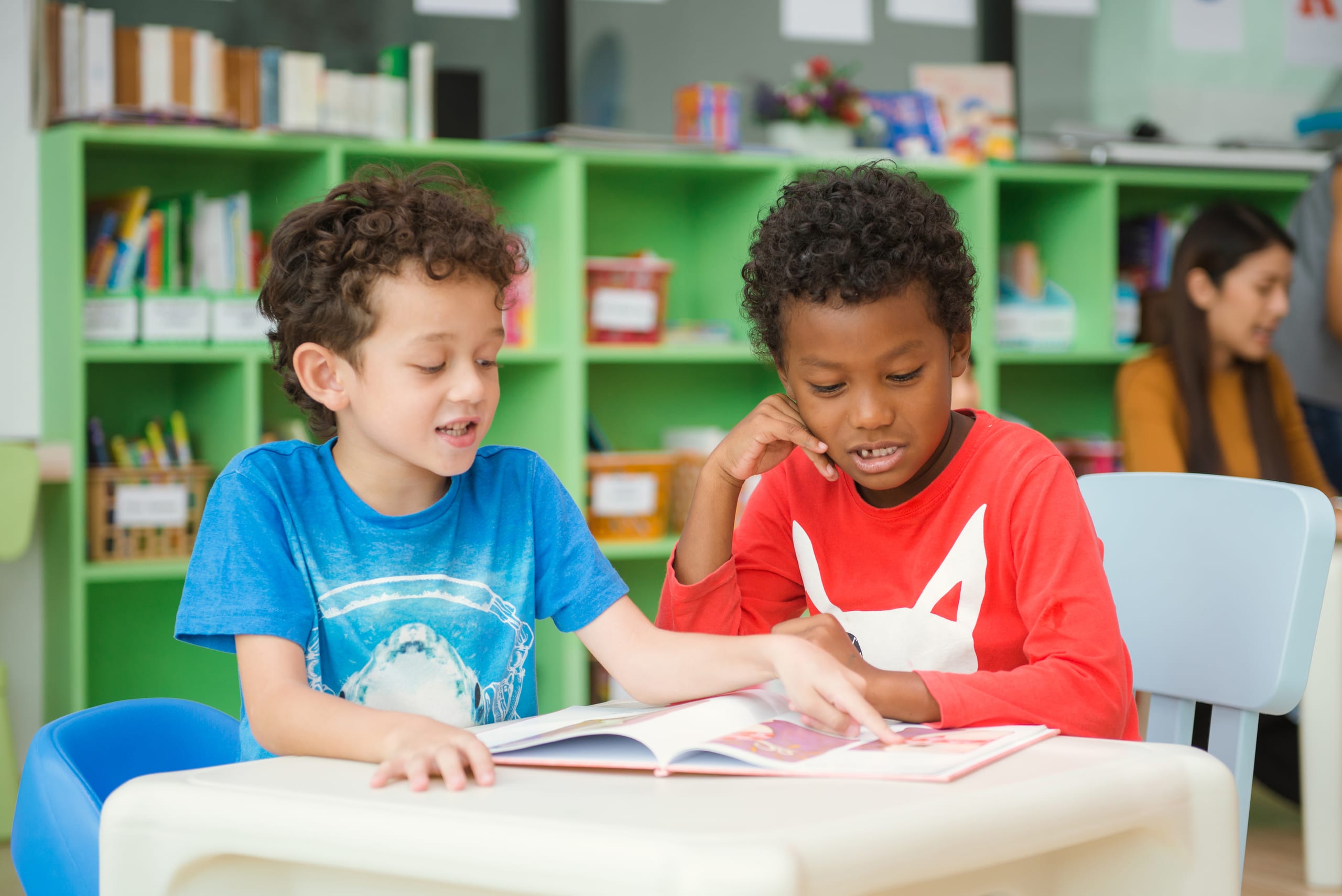
More than one in four B.C. students start Grade 4 below expectations in reading, according to the province's latest Foundation Skills Assessment results. Premier Lorne Doerkson's new government has told its education minister to "prioritize evidence-based literacy," but the mandate letter does not say what that will mean in classrooms.
In the October 2025 assessment, 27.3 per cent of the 44,221 Grade 4 students who wrote the literacy test scored at the lowest level, "emerging," according to provincial data published on the B.C. Data Catalogue. That is about 12,000 children. In public schools the figure was 30.2 per cent. In independent schools it was 11.6 per cent.
The share has risen over the past eight years. When the current version of the test began in October 2017, 21.4 per cent of Grade 4 writers were emerging in reading. The share was 23.2 per cent in October 2019, before the pandemic, and 25.4 per cent in 2023. It peaked at 33.5 per cent in October 2024, then fell back in 2025. These figures are ThinkPol calculations from the ministry's results data.
What the numbers show, and what they don't
The FSA is written in the fall of Grade 4, so it measures what children learned by the end of Grade 3. Advocates and researchers often treat that point as a cut-off because children who are not reading well by then rarely catch up. The ministry renamed the "reading" test "literacy" in 2021 and dropped a writing question. Its technical notes say the two sets of results can still be compared.
Part of the rise may come from who writes the test. In 2017, 76.6 per cent of Grade 4 students expected to write it took part. In 2025 the figure was 84.1 per cent. Students who skip the test are not a random group. Only 61 per cent of Grade 4 students with disabilities or diverse abilities wrote it in 2025, so bringing more students in could push the emerging share up. The published data does not show how much of the increase this explains. The ministry also advises against comparing the February 2021 test, which was delayed by the pandemic, with other years.
The gaps between groups are large. In 2025, 42.7 per cent of Indigenous Grade 4 writers were emerging in literacy, compared with 25.5 per cent of non-Indigenous students. Among students with disabilities or diverse abilities, the figure was 38.5 per cent.
A think tank's case
The numbers come as the Aristotle Foundation for Public Policy, a Canadian think tank, argues that Canadian reading instruction has lagged behind research. In a Nov. 18 paper, David Livingstone, David Hunt and Pio Tran blame "balanced literacy" for low reading results. In that approach, children are often taught to guess unfamiliar words from pictures or context, a practice known as "three-cueing." The authors argue for "structured literacy," which teaches sound-letter relationships, decoding and word parts explicitly and in order. They cite the Ontario Human Rights Commission's 2022 Right to Read inquiry. It concluded that "reading science does not support" cueing-based methods.
The paper also says that between 20 and 56 per cent of students cannot read by Grade 4, depending on the province. That range combines different provincial tests given in different grades and years. A companion paper from the foundation says the tests "are not perfectly comparable." The figure it gives for B.C. is about 30 per cent, based on the FSA.
The foundation also points to a reading intervention led by George Georgiou at the University of Alberta. It involved about 1,000 struggling Grade 2 readers in Alberta, Ontario, Quebec, Saskatchewan and B.C. Children worked in small groups four times a week for 30 minutes at a time. In an August university article, Georgiou described preliminary results. About 80 per cent of participants gained about a year and a half more than normal development would predict after five months, and about half needed no further help. The results have not yet been published in a journal, and the university's account does not mention a comparison group.
Where B.C. stands
B.C. has started to move under the previous NDP government. The ministry made early literacy screening mandatory for kindergarten in the 2025-26 school year. Its 2026-27 guidance requires districts to screen all public school students from kindergarten to Grade 3, two to three times a year. Districts can use approved commercial tools such as Acadience Reading, aimswebPlus and DIBELS, or another tool that meets the ministry's criteria. The ministry is building its own B.C. Early Literacy Screening Tool, which it says will be mandatory in all public K-3 classrooms from the 2027-28 school year.
Screening finds the children who are struggling. It does not decide how they are taught. Dyslexia Canada, which tracks each province's progress, last updated its B.C. assessment in August 2025. It said B.C.'s curriculum still listed "consistently using three cueing systems" as a reading strategy. It also said B.C. has no requirement for schools to use evidence-based interventions and no rules on tracking or monitoring them. The province does not collect data on intervention outcomes. The organization found that teacher certification does not require coursework on how children learn to read or on dyslexia. At that time, only Alberta, New Brunswick, Nova Scotia and Ontario had removed cueing from their curriculum and guidance.
Teachers' unions have resisted mandating one method. In 2024, Dyslexia BC asked the province to require structured literacy. Carole Gordon, the BC Teachers' Federation's first vice-president at the time, told The Tyee, "We think teachers have the professional judgment and the expertise to determine the ways that the students in their particular classroom need to experience literacy reading and writing."
One line in the mandate letter
Education Minister Lynne Block's mandate letter, released Tuesday, puts reading second on her list. The first item is to "restore letter grades for Grades 4–9 and supervised provincial examinations." The second is to "prioritize evidence-based literacy, mathematics and foundational learning."
The letter says nothing more on reading. It does not mention screening, cueing, structured literacy, teacher training or interventions, and it sets no target for FSA results. Like every minister, Block must set out "clear plans, timelines, expected results, and measures of success" for her assignments.
The first Grade 4 class to have gone through mandatory screening will be this year's Grade 3 students, who write the FSA in October 2027. The children screened in kindergarten in 2025 will write it in the fall of 2029.
Sources: B.C. Ministry of Education and Child Care, Foundation Skills Assessment results 2017/18 to 2025/26 and FSA technical notes, B.C. Data Catalogue; Ministry of Education and Child Care, "K-12 Literacy Supports Initiative: Frequently Asked Questions, 2026-27 school year" and minister's letter to parents, Sept. 3, 2026; mandate letter from Premier Lorne Doerkson to Education Minister Lynne Block, Nov. 24, 2026; David Livingstone, David Hunt and Pio Tran, "Why Literacy Is at an All-Time Low—and What to Do About It," Aristotle Foundation for Public Policy, Nov. 18, 2026; Dyslexia Canada, National Snapshot: British Columbia, updated Aug. 20, 2025; University of Alberta Folio, Aug. 27, 2026; The Tyee, Dec. 13, 2024. Percentages are ThinkPol calculations from the ministry's published counts.