Coast Guard keeps two emergency tugs on B.C. coast until 2028 as tanker traffic hits record

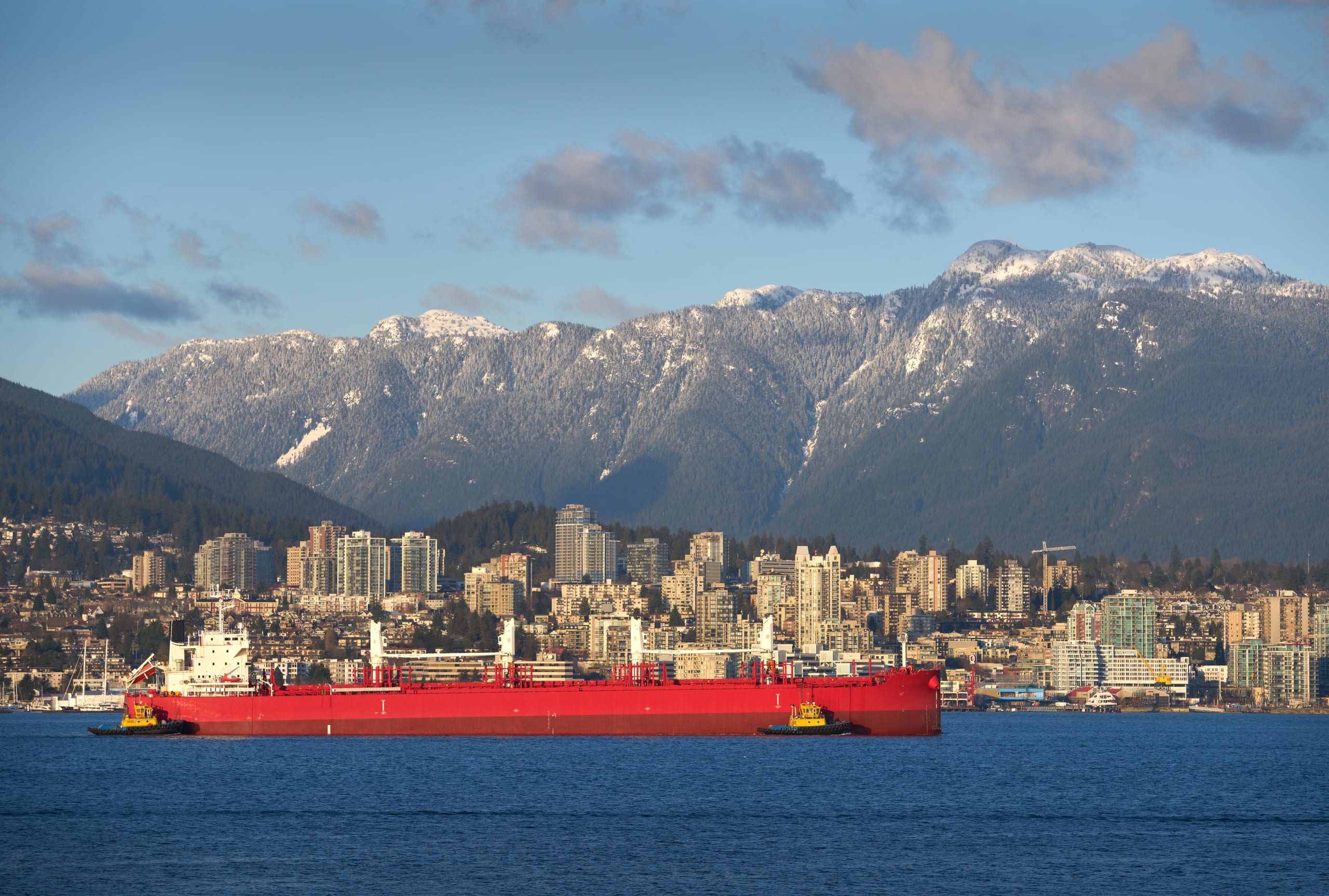
The Canadian Coast Guard will keep two leased emergency towing vessels working off the British Columbia coast for two more years. The arrangement is meant to tide Ottawa over until it has a long-term plan for rescuing large ships in distress, at a time when more oil tankers are leaving Burrard Inlet than ever before.
The Coast Guard said Thursday it has extended its contract for the Atlantic Eagle and Atlantic Raven, two large offshore tugs that can take a disabled tanker or container ship under tow and pull it away from the shore before it runs aground. The government did not disclose the value of the contract. The vessels are owned and crewed by Atlantic Towing, part of the Irving group of companies in New Brunswick, with Coast Guard personnel added.
One tug patrols northern waters between the Alaska border and the northern tip of Vancouver Island. The other covers the south, including the west coast of Vancouver Island and the Strait of Juan de Fuca. The Coast Guard says the pair has responded to more than 100 incidents since 2018.
A stopgap since 2018
The tugs were first leased in 2018 under the federal Oceans Protection Plan, on a three-year contract that has since been extended in short increments. In 2022, the Coast Guard renewed the lease for one year.
The latest extension was promised in January. At a meeting in Prince Rupert with the Coastal First Nations–Great Bear Initiative, Prime Minister Mark Carney committed to extending the leases until 2028 and to "ensure ETV capacity is consistent with shipping activity," according to the Prime Minister's Office readout. He also promised to fund a marine traffic risk assessment study. Thursday's release describes the extension as "an interim measure that supports the development of a long-term national towing strategy." No such strategy has been published.
In September, Carney announced $1.2 billion for ocean protection, including a renewal of parts of the Oceans Protection Plan. He tied the spending directly to new West Coast infrastructure, including the Port of Vancouver's Roberts Bank Terminal 2. "To effectively and sustainably build out our marine infrastructure, we will first protect our oceans," the announcement said.
More tankers in Burrard Inlet
The extension comes as oil tanker traffic out of Vancouver runs at record levels. Before the Trans Mountain expansion opened in May 2024, the pipeline set aside 79,000 barrels a day for its Westridge Marine Terminal in Burnaby, according to the Canada Energy Regulator. The terminal can now export up to 630,000 barrels a day. The regulator counted an average of 23 vessels a month departing Westridge between June 2024 and July 2025. Analysts at RBC counted 29 tankers carrying Canadian crude out of Vancouver in July, close to what the bank estimates the pipeline can fill at full capacity.
Laden tankers leaving Westridge are escorted by tugs through Burrard Inlet and the Salish Sea. The Coast Guard's two emergency towing vessels serve a different purpose. They stand by offshore for any large ship, laden or not, that loses power or steering in open water, where a drifting vessel can reach the coast in hours.
Defence Minister David McGuinty, whose department now includes the Coast Guard, said the extension delivers on a commitment "made to coastal communities and First Nations partners."
Sources: Canadian Coast Guard news release, Nov. 19, 2026; Prime Minister's Office, readout of meeting with Coastal First Nations leadership, Jan. 13, 2026, and news release, Sept. 29, 2026; Canada Energy Regulator, Market Snapshot on the Trans Mountain Expansion, 2025.