



Larger blocks of similar buildings linked to cooler cities, study of 101 cities finds
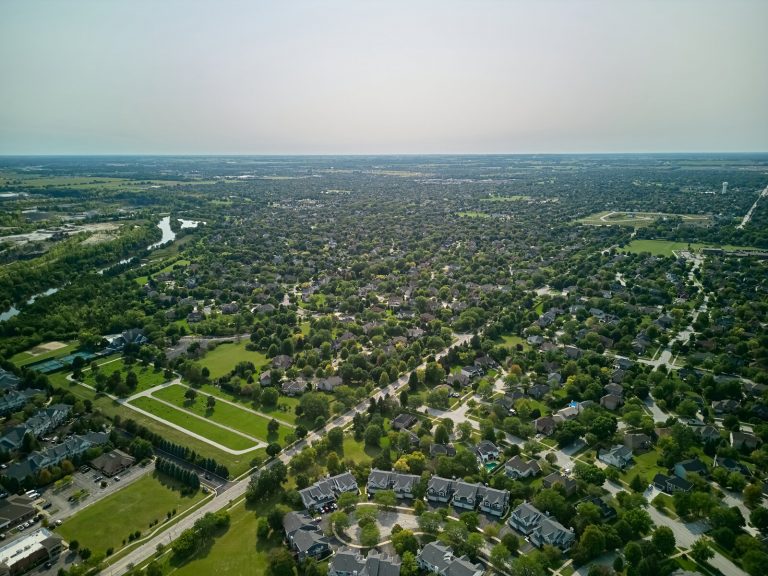
Cities that group similar buildings into larger, continuous blocks tend to have weaker surface heat islands during the day, according to a study of 101 cities around the world. The study was published October 19 in the Proceedings of the National Academy of Sciences.
Researchers from Ghent University, Sun Yat-sen University, the Chinese Academy of Sciences, the University of Cambridge, Imperial College London and NYU Shanghai looked at a part of urban form that heat-mitigation planning has mostly ignored: how big the patches of buildings with the same function are. The authors call this dimension “invisible” to conventional analyses, which measure density or green cover but miss how far a single type of building stretches without interruption.
Measuring “sameness” in the built environment
The urban heat island effect is the reason city surfaces get much hotter than the countryside around them. It makes heat waves more dangerous, pushes up demand for air conditioning and wears on urban ecosystems. Most strategies for dealing with it focus on adding trees, using reflective roofs, or limiting how densely land is built up.
The authors argue that the arrangement of land uses could matter too. Buildings that serve the same purpose, such as housing, offices or factories, usually look alike and are busy at the same times of day. They also give off waste heat on similar schedules. The researchers suggest that when such buildings sit next to each other over a large area, the size of that cluster could change how air moves through the neighbourhood and how heat builds up.
To test this, the team created a measure called the Urban Homogeneous Scale, or UHS. It records how far a continuous cluster of functionally similar buildings stretches. They then compared UHS with land surface temperatures across 233,844 observations in 101 cities.
Bigger clusters, cooler days
Larger clusters were linked to lower daytime surface heat island intensity. On average, every 100 metres of extra UHS went along with a 4.5 per cent drop in the daytime heat island.
The size of the link varied by setting. It was strongest in inland cities, in humid climates and in high-income regions.
An unequal benefit
The cooling link was weaker in lower-income regions. Heavy development cancelled out more of the benefit there: larger building footprints and greater building volume reduced the cooling associated with UHS more than they did in wealthier cities. The authors say this points to a socioeconomic inequality in who gets the benefit.
The study is observational. It shows a link between cluster scale and surface temperature, not that one causes the other. It also deals with surface heat islands, which are measured from land surface temperature and are not the same as the air temperatures people feel. The authors present UHS as one more thing planners could consider, together with limits on building area and volume, rather than a fix in its own right.
No one-size-fits-all fix
Because the benefit varies so much by climate and income level, the researchers argue against a single rule applied everywhere. They suggest that cities develop local heat strategies that combine three tools: how land uses are arranged, density control and investment in greenery.
If the pattern holds, it adds a new question for cities that are reworking zoning in response to rising heat. Planners already ask how much is built and how green a place is. They might also need to ask how large the blocks of similar buildings should be.
Source: Zhang, X. et al., “Toward cooler cities by larger homogeneous functional clusters,” Proceedings of the National Academy of Sciences 123 (43), 2026. doi:10.1073/pnas.2617717123
