



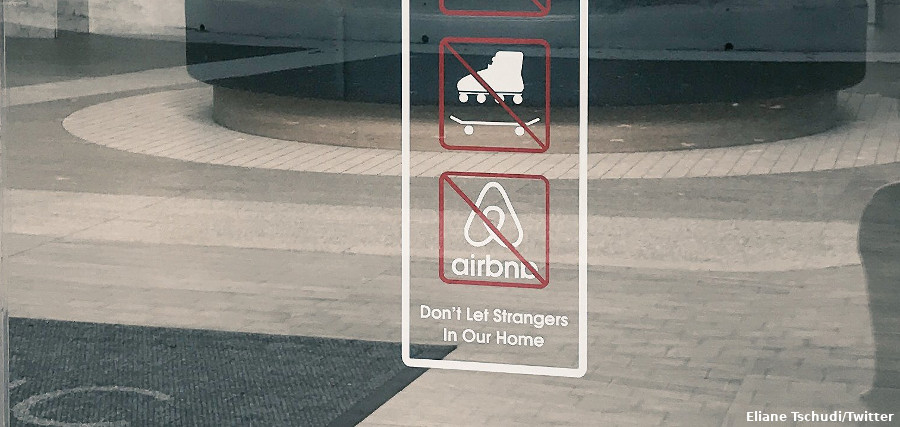
BC banned Airbnb from non-primary residences. Then the rents came down.
On October 16, 2023, the day BC announced it would restrict short-term rentals to principal residences, Tamara Stone, a Kelowna realtor, received six calls from panicked property owners before noon. Within days, 250 new houses and 392 new condos appeared in the Central Okanagan MLS. Deanna Steele, who ran a luxury vacation rental management agency in the same market, watched investors who had bought specifically to run short-term rentals try to exit all at once. “They thought they were going to make a mint because they saw what was happening in the gold rush,” she said. “And now they’re realizing, ‘Oh, big mistake.'” [1]CBC reported on the wave of panic selling among BC short-term rental operators following the October 2023 legislation announcement, with realtors describing “saturated” markets and widespread confusion about what the rules would mean for investor properties. https://www.cbc.ca/news/canada/british-columbia/short-term-rental-property-sales-bc-1.7037791
In Victoria, Nancy Paine had built a company called Superhost managing 65 short-term rental properties at its peak. When the rules took effect May 1, 2024, she closed the business and laid off 15 staff. “I’m planning to close my business as of May 1,” she told CBC. “It’s really sad because I’ve worked really hard.” [2]CBC reported on BC property owners and STR operators facing the end of their businesses as the province’s principal residence rules came into force in May 2024. https://www.cbc.ca/news/canada/british-columbia/airbnb-bc-housing-1.7053382 Paine’s story circulated as evidence that the government had gone too far. The short-term rental market she was part of had nothing to do with homeowners renting spare rooms. It was professionally managed operations running residential buildings as hotel inventory.
The scale of that conversion is worth sitting with before getting to what the regulations produced. Nationally, roughly 235,000 units were being used for short-term rentals across Canada as the BC rules took effect. In Ontario alone, 74,000 listings were active on Airbnb as of late 2023, of which 41% were operated by commercial hosts, people running multiple properties rather than renting out a room in their home. [3]McGill University’s Urban Politics and Governance lab (UPGo) published a 2024 report on short-term rentals in Ontario, finding 74,000 STR listings with 38,000 active on a given day, and commercial hosts controlling a disproportionate share of the market. https://upgo.lab.mcgill.ca/publication/ontario-str-2024/Wachsmuth_Ontario_STR_2024.pdf The top 10% of hosts generated 44% of total short-term rental revenue. Those commercial hosts were earning an average of $6,700 per month per listing in mid-2023. The average Ontario rent at the time was $1,408. [4]The gap between commercial STR revenue and long-term rental income was documented in UPGo’s 2024 Ontario report, establishing the financial incentive structure that drew investment properties away from the long-term rental market. https://upgo.lab.mcgill.ca/publication/ontario-str-2024/Wachsmuth_Ontario_STR_2024.pdf The financial logic for running a short-term rental instead of renting to a tenant was not subtle.
BC’s rules, which came into force May 1, 2024, restricted entire-home short-term rentals to a host’s principal residence, plus one additional suite or laneway house on the same property. Resort municipalities got an exemption. Everyone else in communities over 10,000 people did not. A year later, in May 2025, the province added a mandatory registry: unregistered listings were removed from platforms, and future bookings on non-compliant properties were cancelled. [5]The BC government’s legislation and its implementation timeline, including the May 2025 provincial registry requirement, are documented at the BC government’s short-term rental legislation overview page. https://www2.gov.bc.ca/gov/content/housing-tenancy/short-term-rentals/short-term-rental-legislation Airbnb’s Canada policy lead Alex Howell called the registry “rushed” and said the government “really just rushed into launching the system that hadn’t been fully tested.” The opposition from Airbnb was consistent throughout: the company argued the rules would damage tourism, take money from hosts, and not meaningfully address housing costs. [6]Airbnb’s Alex Howell publicly objected to both the principal residence restrictions and the registry implementation, arguing the rules would harm tourism and not deliver the promised housing benefits. https://www.biv.com/news/bc-pushes-ahead-with-short-term-rental-crackdown-despite-tourism-warnings-10656846 Howell specifically cited the FIFA World Cup 2026 as a reason BC needed more short-term rental capacity, not less. In early 2026, Airbnb launched a $1,000 CAD incentive for new entire-home hosts in World Cup cities, including Toronto and Vancouver, two cities where entire-home short-term rentals are already restricted to principal residences. The company’s Chief Business Officer described it as an opportunity for “residents of host cities to boost their incomes.” It was also an opportunity to rebuild the inventory that regulation had removed. [7]Airbnb announced a $1,000 CAD incentive for new entire-home hosts in FIFA World Cup 2026 host cities, including Toronto and Vancouver, for first guest arrivals through July 31, 2026. https://news.airbnb.com/airbnb-is-offering-1000-to-new-fifa-world-cup-2026-hosts-in-canada/
One year after the rules took effect, Vancouver’s rental vacancy rate had risen from 1.6% to 3.7%, the highest since 1988. Victoria’s reached 3.3%, the highest since 1999. STR listings fell 31% in Kelowna, 24% in Victoria, and 22% in Vancouver. Roughly 7,000 operators either did not register or left the market entirely. BC rents fell 8.5% over two years, with Vancouver recording 16 consecutive months of rent decline. [8]BNN Bloomberg reported on the one-year results of BC’s short-term rental crackdown, with vacancy rate data and rent decline figures drawn from CMHC’s 2025 Rental Market Report and the provincial registry numbers. https://www.bnnbloomberg.ca/business/real-estate/2025/04/24/one-year-after-bcs-short-term-rental-crackdown-has-it-made-housing-cheaper/ Housing Minister Ravi Kahlon declared victory. “We’re seeing rents come down across the province, in every community,” he told reporters.
The BC Real Estate Association was less convinced. Chief Economist Brendon Ogmundson attributed the vacancy rise primarily to new rental supply hitting the market and a drop in demand from international students and temporary foreign workers, not the STR crackdown. “My guess is pretty small,” he said of the regulations’ impact. “I don’t think it’s had a major impact on things like rental affordability.” The BCREA formally called for a review of the ban. [9]The BC Real Estate Association’s chief economist publicly attributed BC’s vacancy rate rise primarily to supply completions and population slowdown rather than the STR restrictions, and the association called for a policy review. https://www.bcrea.bc.ca/advocacy/bc-real-estate-association-calls-for-review-of-bcs-short-term-rental-ban/ Andy Yan, director of the City Program at Simon Fraser University, was more cautious than dismissive but pointed to the same problem: interest rates, immigration policy changes, and general economic conditions all shifted around the same time, making it difficult to isolate the STR signal. CMHC’s own language in its 2025 Rental Market Report credited “historically strong completions of rental units and weaker demand caused by slower population and economic growth” as the primary drivers of softening rents. [10]CMHC’s 2025 Rental Market Report attributed the national vacancy rate rise primarily to record rental completions and weaker population growth, noting BC’s sharp decline in net international migration as a significant factor. https://www.cmhc-schl.gc.ca/media-newsroom/news-releases/2025/canadas-vacancy-rate-rises-amid-historically-high-rental-construction Will Gladman of the Vancouver Tenants Union pushed back from a different direction: housing remained “still unbelievably expensive and way out of reach, even for people making decent income.”
The attribution debate is real and the honest answer is that it’s unresolved. The population growth slowdown in BC was significant and happened simultaneously. Disentangling two large concurrent changes is genuinely difficult, and anyone claiming certainty about the relative weight of each factor is overstating what the data shows. What the data does show is that vacancy rates went up sharply and rents came down. Whether the STR ban deserves most of the credit or some of it is a question worth keeping open.
The causal evidence that does exist comes from Ontario, not BC. McGill University’s Urban Politics and Governance lab published a study in 2024 that established, for the first time in Canada, a direct statistical link between commercial short-term rental activity and rent levels across municipalities. The finding: commercial STR operations have cost Ontario renters $1.6 billion in additional rent since 2017. Municipalities that had already implemented principal-residence rules saw rent increases run 3.3% lower than those that hadn’t, translating to roughly $50 per month per tenant. If the rules were extended province-wide, the researchers estimated an additional $572 million per year in renter savings. [11]McGill UPGo’s 2024 Ontario study, authored by Prof. David Wachsmuth, was described as the first in Canada to establish a causal link between commercial short-term rental activity and higher rents across municipalities. https://upgo.lab.mcgill.ca/publication/ontario-str-2024/Wachsmuth_Ontario_STR_2024.pdf The study won’t satisfy everyone, but it matters that the causal relationship has been tested rather than assumed.
The federal government moved more slowly and less boldly. Effective January 1, 2024, the Canada Revenue Agency began denying income tax deductions (including mortgage interest) on short-term rental income where the property was non-compliant with local licensing rules or located in a jurisdiction where STRs were outright prohibited. In December 2024, the Department of Finance launched a $50 million fund to help municipalities increase STR enforcement, with applications open through January 2025. [12]The federal government’s STR tax deduction denial took effect January 1, 2024, and the $50M enforcement fund for municipalities was announced in December 2024. https://www.canada.ca/en/revenue-agency/news/newsroom/tax-tips/tax-tips-2025/changes-rules-eligible-deductions-short-term-rental-income.html These are meaningful interventions at the margins. They are not the same as what BC did.
Montreal tried something different. Rather than a year-round principal residence requirement, the city introduced a seasonal model: short-term rentals are now permitted city-wide only between June 10 and September 10. Outside that window, only registered units in designated zones may operate. Violations cost $1,000 per day, rising to $2,000 for repeat offences, with the burden of proof placed on property owners rather than the city. [13]Montreal’s seasonal short-term rental model, fine structure, and enforcement approach were reported by CBC. The city estimated up to 2,000 illegal units could return to the long-term rental market under the new rules. https://www.cbc.ca/news/canada/montreal/airbnb-rule-changes-montreal-allowed-1.7445844 Airbnb objected publicly, warning of damage to “over $400 million in economic activity.” The city proceeded anyway. The seasonal approach is notable because it doesn’t require operators to choose between long-term rental and short-term rental permanently — it requires them to make that choice most of the year.
Toronto added 21 enforcement staff, shortened the process for revoking STR registrations from 40 days to 10, and introduced annual compliance inspections for all approved registrations as of January 2025. [14]Toronto’s 2024 amendments to its short-term rental bylaw and the expanded enforcement measures were documented in a City of Toronto planning and housing committee report. https://www.toronto.ca/legdocs/mmis/2024/ph/bgrd/backgroundfile-244524.pdf Whether those measures will produce results comparable to BC’s is unclear. Toronto did not implement the provincial registry model, and enforcement has historically been the weak point in municipal STR regulation across the country.
The BC experiment is the most useful data point Canada has ever had on what happens when STR restrictions are actually enforced at scale rather than passed and ignored. The vacancy and rent numbers moved in the right direction. The causal picture is contested enough that it would be dishonest to present the regulations as solely responsible. What’s harder to contest is the underlying logic: commercial operators were extracting housing from the long-term rental market and earning five times the monthly revenue a tenant would have generated. When that incentive was removed for 7,000 operators, something had to give. The argument that nothing gave, that vacancy rates hit 30-year highs and rents fell for 16 consecutive months purely by coincidence, requires more faith in coincidence than the evidence warrants.

References
| 1. | ↑ | CBC reported on the wave of panic selling among BC short-term rental operators following the October 2023 legislation announcement, with realtors describing “saturated” markets and widespread confusion about what the rules would mean for investor properties. https://www.cbc.ca/news/canada/british-columbia/short-term-rental-property-sales-bc-1.7037791 |
| 2. | ↑ | CBC reported on BC property owners and STR operators facing the end of their businesses as the province’s principal residence rules came into force in May 2024. https://www.cbc.ca/news/canada/british-columbia/airbnb-bc-housing-1.7053382 |
| 3. | ↑ | McGill University’s Urban Politics and Governance lab (UPGo) published a 2024 report on short-term rentals in Ontario, finding 74,000 STR listings with 38,000 active on a given day, and commercial hosts controlling a disproportionate share of the market. https://upgo.lab.mcgill.ca/publication/ontario-str-2024/Wachsmuth_Ontario_STR_2024.pdf |
| 4. | ↑ | The gap between commercial STR revenue and long-term rental income was documented in UPGo’s 2024 Ontario report, establishing the financial incentive structure that drew investment properties away from the long-term rental market. https://upgo.lab.mcgill.ca/publication/ontario-str-2024/Wachsmuth_Ontario_STR_2024.pdf |
| 5. | ↑ | The BC government’s legislation and its implementation timeline, including the May 2025 provincial registry requirement, are documented at the BC government’s short-term rental legislation overview page. https://www2.gov.bc.ca/gov/content/housing-tenancy/short-term-rentals/short-term-rental-legislation |
| 6. | ↑ | Airbnb’s Alex Howell publicly objected to both the principal residence restrictions and the registry implementation, arguing the rules would harm tourism and not deliver the promised housing benefits. https://www.biv.com/news/bc-pushes-ahead-with-short-term-rental-crackdown-despite-tourism-warnings-10656846 |
| 7. | ↑ | Airbnb announced a $1,000 CAD incentive for new entire-home hosts in FIFA World Cup 2026 host cities, including Toronto and Vancouver, for first guest arrivals through July 31, 2026. https://news.airbnb.com/airbnb-is-offering-1000-to-new-fifa-world-cup-2026-hosts-in-canada/ |
| 8. | ↑ | BNN Bloomberg reported on the one-year results of BC’s short-term rental crackdown, with vacancy rate data and rent decline figures drawn from CMHC’s 2025 Rental Market Report and the provincial registry numbers. https://www.bnnbloomberg.ca/business/real-estate/2025/04/24/one-year-after-bcs-short-term-rental-crackdown-has-it-made-housing-cheaper/ |
| 9. | ↑ | The BC Real Estate Association’s chief economist publicly attributed BC’s vacancy rate rise primarily to supply completions and population slowdown rather than the STR restrictions, and the association called for a policy review. https://www.bcrea.bc.ca/advocacy/bc-real-estate-association-calls-for-review-of-bcs-short-term-rental-ban/ |
| 10. | ↑ | CMHC’s 2025 Rental Market Report attributed the national vacancy rate rise primarily to record rental completions and weaker population growth, noting BC’s sharp decline in net international migration as a significant factor. https://www.cmhc-schl.gc.ca/media-newsroom/news-releases/2025/canadas-vacancy-rate-rises-amid-historically-high-rental-construction |
| 11. | ↑ | McGill UPGo’s 2024 Ontario study, authored by Prof. David Wachsmuth, was described as the first in Canada to establish a causal link between commercial short-term rental activity and higher rents across municipalities. https://upgo.lab.mcgill.ca/publication/ontario-str-2024/Wachsmuth_Ontario_STR_2024.pdf |
| 12. | ↑ | The federal government’s STR tax deduction denial took effect January 1, 2024, and the $50M enforcement fund for municipalities was announced in December 2024. https://www.canada.ca/en/revenue-agency/news/newsroom/tax-tips/tax-tips-2025/changes-rules-eligible-deductions-short-term-rental-income.html |
| 13. | ↑ | Montreal’s seasonal short-term rental model, fine structure, and enforcement approach were reported by CBC. The city estimated up to 2,000 illegal units could return to the long-term rental market under the new rules. https://www.cbc.ca/news/canada/montreal/airbnb-rule-changes-montreal-allowed-1.7445844 |
| 14. | ↑ | Toronto’s 2024 amendments to its short-term rental bylaw and the expanded enforcement measures were documented in a City of Toronto planning and housing committee report. https://www.toronto.ca/legdocs/mmis/2024/ph/bgrd/backgroundfile-244524.pdf |