Supreme Court upholds Quebec's secularism law, but splits on whether judges can still flag Charter breaches

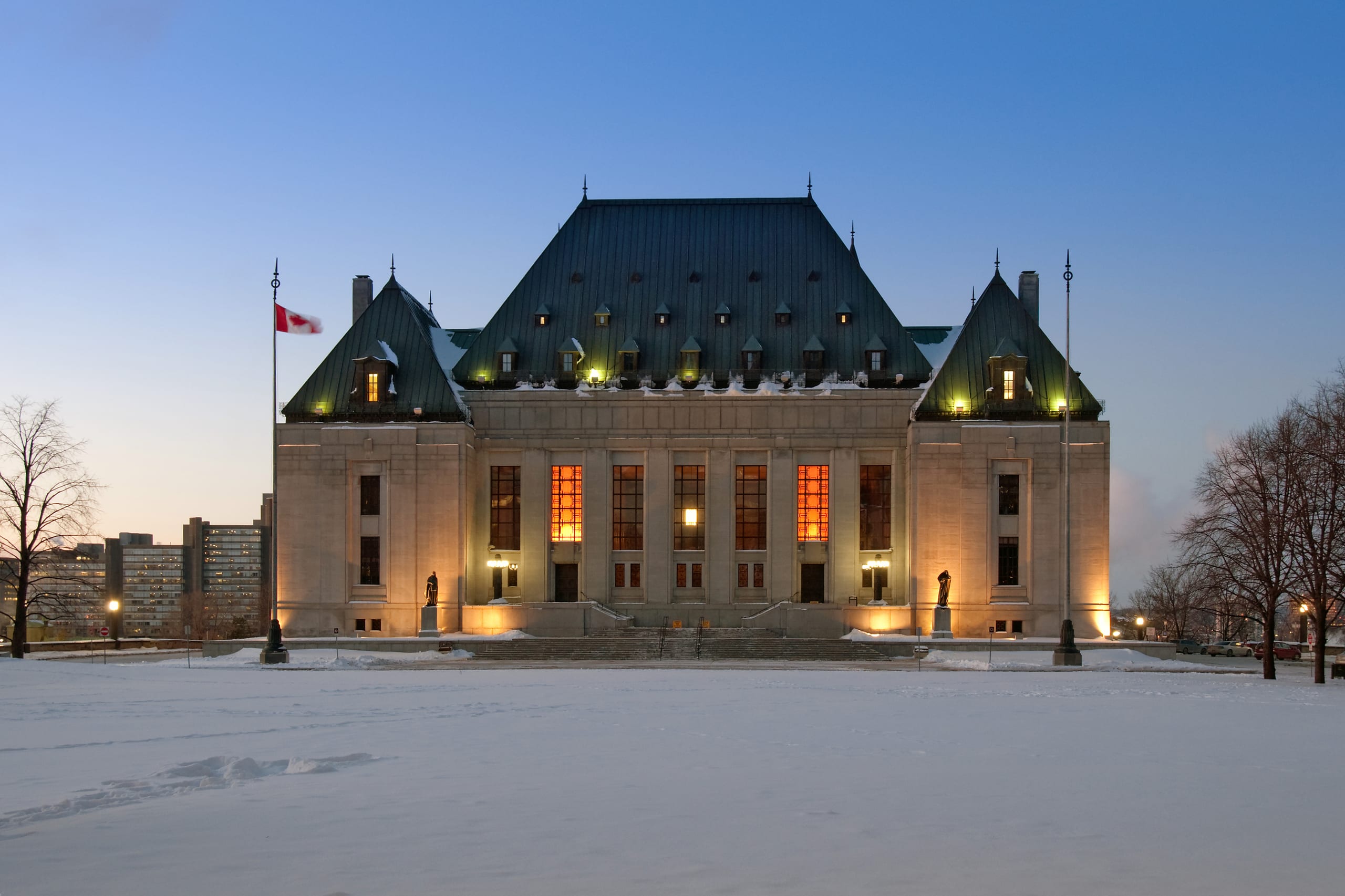
The Supreme Court of Canada has upheld almost all of Quebec's secularism law, ruling Thursday that the province validly used the Charter's notwithstanding clause to shield it from challenges based on freedom of religion, freedom of expression and equality rights.
The one part the court struck down is narrow: the requirement that members of the National Assembly sit with their faces uncovered. All seven judges who heard the case agreed that this breaches the democratic right under section 3 of the Charter to run for and sit in a legislature, a right the notwithstanding clause can't override.
The decision, English Montreal School Board v. Quebec (Attorney General), 2026 SCC 41, runs to more than 500 pages and four separate sets of reasons. It dismissed appeals by the English Montreal School Board, the World Sikh Organization of Canada, the National Council of Canadian Muslims, the Canadian Civil Liberties Association and individual teachers, and also dismissed Quebec's cross-appeal on the face-covering rule.
What the law does
The Act respecting the laicity of the State, passed in 2019 and known as Bill 21, bars people in certain positions of authority from wearing religious symbols at work. Its section 6 covers, among others, the justice minister, the President of the National Assembly, Crown prosecutors, government lawyers, and principals, vice-principals and teachers in public schools. Section 8 requires public sector staff to have their faces uncovered while working, and the public to uncover their faces to receive certain services.
Quebec invoked both the notwithstanding clause in section 33 of the Canadian Charter and the equivalent override in the Quebec Charter, which lets a legislature declare that a law operates notwithstanding the rights in sections 2 and 7 to 15 for up to five years at a time.
Six judges: the override was validly used
Six of the seven judges, Chief Justice Richard Wagner and Justices Andromache Karakatsanis, Suzanne Côté, Malcolm Rowe, Nicholas Kasirer and Michelle O'Bonsawin, held that Quebec met the requirements of section 33. Justice Sheilah Martin found it unnecessary to decide the point. Writing for himself and Justices Côté and Rowe, Wagner reaffirmed the court's 1988 ruling in Ford v. Quebec: section 33 sets only formal requirements, chiefly that the law expressly say which rights it overrides, and imposes no other limits beyond those in its text.
Justices Karakatsanis and O'Bonsawin, and separately Justice Kasirer, wrote that there are substantive limits on the clause. Karakatsanis and O'Bonsawin said it cannot be used to permanently extinguish Charter rights or in a way "incompatible with the fundamental character of Canada's free and democratic society." But they agreed that Bill 21 did not cross those lines.
Can courts still say a shielded law breaches rights?
The court split 4-3 on a question that matters well beyond Quebec: once a government invokes the notwithstanding clause, can a judge still declare that the law violates the Charter, even without striking it down?
Justices Karakatsanis, Kasirer, Martin and O'Bonsawin said yes. They reasoned that the rights in question continue to exist while a law is shielded, and that because the override expires after five years unless renewed, voters deciding whether to renew it are entitled to know what rights are being limited. Wagner, Côté and Rowe said a court has no jurisdiction to make such a declaration once the clause is validly used.
Even so, the court made no declaration in this case. Martin, who formed part of the majority on jurisdiction, declined because she would have struck down the religious-symbol and face-covering provisions on other grounds. That left three judges, Kasirer, Karakatsanis and O'Bonsawin, who would have declared that sections 6 and 8 unjustifiably infringe freedom of religion, freedom of expression and equality. Kasirer wrote that Quebec had chosen not to present evidence justifying those limits, and that the face-covering rule for people receiving services has no rational connection to the state's religious neutrality, since it restricts members of the public rather than state employees.
Sex equality and minority-language rights
The opponents also argued that Bill 21 violates section 28 of the Charter, which guarantees rights equally to men and women and is not subject to the notwithstanding clause. A 4-3 majority held that section 28 guides how other rights are interpreted but is not a free-standing right that can be used to strike down a law.
Martin, Karakatsanis and O'Bonsawin dissented. Martin wrote that the religious-symbol and face-covering provisions fall hardest on Muslim women, noting that all the documented teachers formally barred from jobs under the law are Muslim women who wear the hijab, and that she would have declared both sections of no force or effect.
On section 23, which protects the right of English- and French-language minorities to manage their own schools, the court accepted that Bill 21 could limit English school boards' ability to hire, keep, transfer or promote some staff. But a majority found it had not been shown that this harms the specific linguistic or cultural interests section 23 protects, overturning the trial judge's exemption for English schools, as the Quebec Court of Appeal had done. Karakatsanis and O'Bonsawin dissented on this point.
The court also rejected arguments based on the division of powers, pre-Confederation statutes and Canada's "constitutional architecture," and upheld the lower courts' finding that the Quebec government's pre-legislation count of school staff wearing religious symbols did not breach the Charter.
Interveners in the case included the British Columbia Humanist Association, the Community Legal Assistance Society and the South Asian Legal Clinic of British Columbia.
Source: Supreme Court of Canada, English Montreal School Board v. Quebec (Attorney General), 2026 SCC 41, judgment rendered Nov. 27, 2026 (full decision; Case in Brief).