



Transit riders in marginalized Vancouver neighbourhoods face more heat on their trips, thesis finds
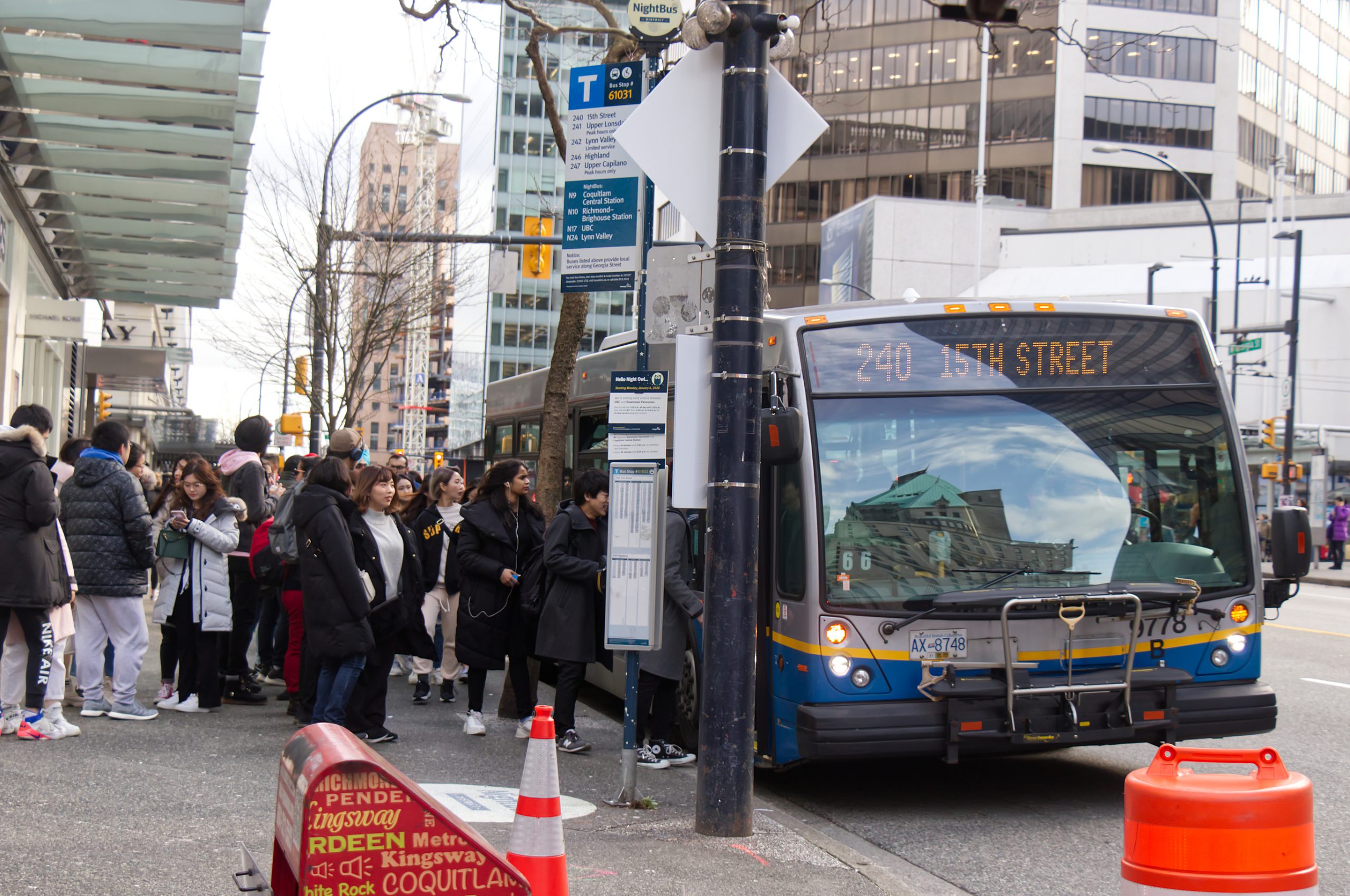
Transit riders from marginalized communities in Vancouver face much more heat on their trips than other riders, according to a new master’s thesis from Western University. In a second case study, bus delays in Washington, D.C., added the most heat exposure for low-income riders.
The thesis, by Henry Shaver, argues that as heat waves become more frequent and intense, transit agencies need to know where riders are most exposed to heat if they want to plan shade, trees and shelters where they are needed most.
Mapping heat along the trip
Transit riders often spend long stretches outdoors, walking to a stop and waiting for a bus or train. That leaves them exposed during dangerous heat. The temperature riders actually feel can vary a lot over short distances, depending on buildings, trees, pavement and other surroundings.
Shaver built measures that combine these small-scale microclimate conditions with transit journeys. They estimate how much heat, and how much shade, riders setting out from each neighbourhood are likely to experience on their trips.
Applied to Vancouver, the measures showed that riders from marginalized communities, including visible minorities, “consistently faced much higher levels of heat exposure,” according to the thesis summary.
When the bus is late
The second part of the thesis looks at what bus delays do to heat exposure. Using real-time transit data from Washington, D.C., Shaver compared how much heat passengers would face waiting at stops if buses ran on schedule with what they faced given actual delays. The extra exposure varied by place and time of day, and delays “disproportionately increased exposure among low-income riders.”
The thesis says the methods could help agencies decide where to add shade and vegetation, and make transit systems more resilient and equitable as the climate warms.
About the research
The thesis is a 2026 master of science thesis at Western University. The full text is under embargo until Oct. 28, 2027. This article is based on the abstract and lay summary in Western’s repository, which don’t include detailed figures. The thesis hasn’t been published in a peer-reviewed journal.
Source: Shaver, H., “Transit in a Changing Climate: Advancing the Assessment of Heat Exposure in Public Transit Systems,” MSc thesis, Western University, 2026. hdl.handle.net/20.500.14721/40758 (CC BY-NC-SA 4.0)
