



YIMBY’s Airbnb problem: the housing movement that takes money from the company removing housing
By Rohana Rezel
In a blog post that remains live on its website, California YIMBY argues that short-term rental regulations make the housing crisis worse. The post cites a single academic study to make the case that restricting Airbnb reduces residential construction permits, drives down property values, and suppresses the building of accessory dwelling units. The post’s conclusion is that cities should “lighten regulations” on platforms like Airbnb to let the housing market “flourish.” [1]CA YIMBY’s blog post “How Short-Term Rentals Increase Homebuilding” promotes the Bekkerman et al. study and argues against STR regulation as a housing supply intervention. https://cayimby.org/blog/how-short-term-rentals-increase-homebuilding/ What the post does not mention is that Airbnb has donated over $1.4 million to YIMBY organizations, that the head of YIMBY Action sits on Airbnb’s paid Housing Council, or that one of the study’s co-authors subsequently joined Airbnb as a “Housing Scholar.”
The study at the center of CA YIMBY’s argument is “The Effect of Short-Term Rentals on Residential Investment,” by Bekkerman, Cohen, Kung, Maiden, and Proserpio, circulated on SSRN in 2021 and published in Marketing Science in 2023. Its headline finding, that a 1% increase in Airbnb listings correlates with a 0.769% increase in residential construction permits, has been widely cited in policy circles, including in a Harvard Business Review summary headlined “Research: Restricting Airbnb Rentals Reduces Development.” [2]The Bekkerman et al. study was published in Marketing Science and promoted in Harvard Business Review under a headline framing STR restrictions as harmful to residential development. https://hbr.org/2021/11/research-restricting-airbnb-rentals-reduces-development The author affiliations received considerably less coverage. Ron Bekkerman, the lead author, was Chief Technology Officer of Cherre Inc., a commercial real estate data company, at the time of writing. John Maiden, a co-author, was Cherre’s Head of Machine Learning. Two of the five authors were employees of the same real estate technology firm. No independent public funding source is disclosed in accessible versions of the paper.
The fifth author, Davide Proserpio, was then an associate professor at USC’s Marshall School of Business specializing in platform economy research. He had previously co-authored work concluding that Airbnb has a “positive impact on house prices and rents.” Phrased differently: Airbnb raises rents. In November 2025, Proserpio joined Airbnb directly as a “Housing Scholar.” [3]Davide Proserpio joined Airbnb as a Housing Scholar in November 2025, having previously co-authored the Bekkerman et al. study cited by CA YIMBY to argue against STR regulations. https://dadepro.github.io/ The CA YIMBY blog post promoting this research remains online with no disclosure of these affiliations.
The funding relationship between Airbnb and YIMBY organizations is documented in Airbnb’s own press releases. In 2024, Airbnb announced a $100,000 contribution to YIMBY Action specifically to support advocacy in Colorado, Hawaii, Michigan, Illinois, Florida, Virginia, and Texas, with additional funding to cover a YIMBY Action organizer for legislative supply reform campaigns. Combined with other donations to housing advocacy organizations, Airbnb’s disclosed contributions since 2022 exceed $1.4 million. [4]Airbnb’s press release announcing support for YIMBY Action and other housing advocacy organizations documented contributions exceeding $1.4 million since 2022. https://news.airbnb.com/supporting-local-solutions-to-help-housing-affordability/ Airbnb also served as presenting sponsor for a YIMBY Democrats of San Diego fundraiser in July 2025 attended by Congressman Scott Peters and Assemblymember Chris Ward. San Diego had 14,351 active short-term rentals at the time of the event, averaging $589 per night. [5]OB Rag reported on the YIMBY Democrats of San Diego fundraiser co-sponsored by Airbnb, noting the contradiction between the organization’s housing supply mission and its corporate sponsor’s business model. https://obrag.org/2025/07/strange-bedfellows-yimby-democrats-and-airbnb/
Laura Foote, the Executive Director of YIMBY Action, is a founding member of Airbnb’s Housing Council, launched in January 2024. The Council’s stated mandate is to “advise Airbnb on policies, initiatives, and partnerships it can support to help spur housing supply and better balance the benefits of home sharing with the needs of communities.” [6]Airbnb announced the launch of its Housing Council in January 2024, with YIMBY Action’s Executive Director Laura Foote as a founding member, positioned to advise Airbnb on housing policy and regulatory strategy. https://news.airbnb.com/introducing-us-housing-council/ Translated from the press release: the head of the country’s most prominent pro-housing advocacy organization is formally advising a corporation whose primary interest in housing policy is defeating the regulations that would return its inventory to the long-term rental market. YIMBY Action then received six-figure donations from that same corporation.
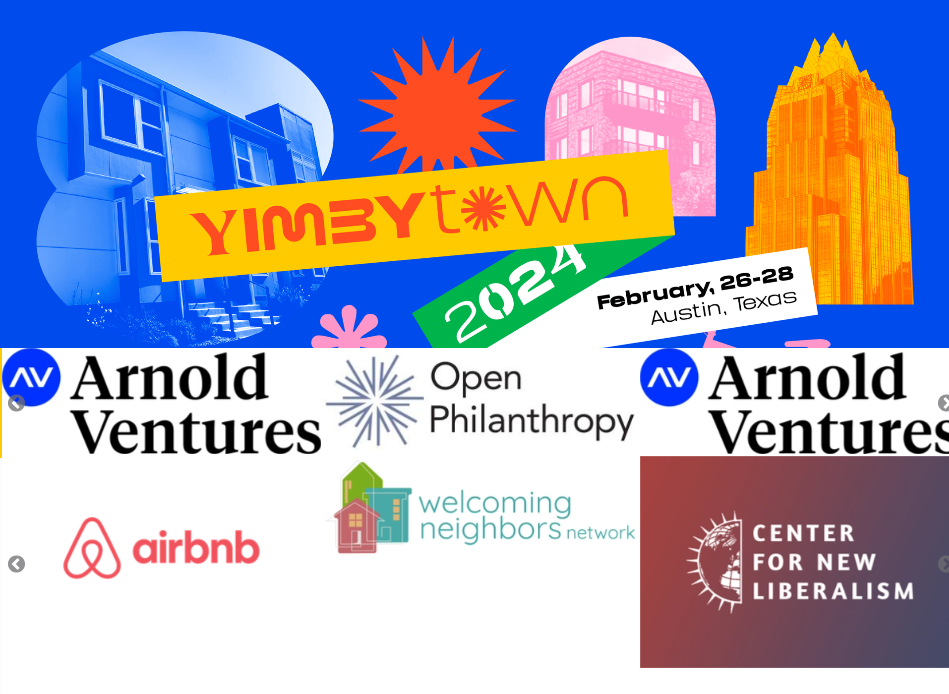
At YIMBYtown 2024, the movement’s annual conference held in Austin, Airbnb appeared as a sponsor alongside the Mercatus Center, a think tank funded by the Koch network. [7]The New Republic reported on the sponsorship arrangements at YIMBYtown 2024, noting Airbnb and the Koch-backed Mercatus Center among the corporate backers of the YIMBY movement’s flagship annual event. https://newrepublic.com/article/179147/case-against-yimbyism-yimbytown-2024 The ideological coalition YIMBY has assembled includes a corporation that profits from removing housing from the rental market and a Koch-funded deregulation think tank. The grassroots members, for their part, appear to believe they are fighting for affordable housing. The first two parties understand the arrangement clearly. It is less certain the third does.
The tactics YIMBY activists use against critics of the movement are documented outside California as well. In Vancouver, directors of Abundant Housing Vancouver (AHV), a pro-real-estate development group whose board members have spoken at YIMBYTown conferences, were involved in a dirty tricks chat, where plans were made to frame anti-Airbnb housing activists as pedophiles. [8]OneCity in damage control over leaked chat logs https://www.biv.com/news/economy-law-politics/onecity-damage-control-over-leaked-chat-logs-8269107.
The YIMBY argument about short-term rentals completes a specific logical circle. The movement’s foundational claim is that housing scarcity results from supply restrictions. Airbnb’s regulatory problem is that cities increasingly classify its entire-home listings as a supply restriction on the long-term rental market. The Bekkerman study, promoted by CA YIMBY and co-authored by people who have since gone to work for Airbnb, reframes STR deregulation as a supply-side win. In this framing, restricting Airbnb is anti-housing, opposing restrictions is pro-housing, and a company that converts residential apartments into tourist accommodation becomes an ally of the housing movement. The circle requires ignoring what happens to the housing that Airbnb removes from the rental market, which is that it stops being available to the people who need it.
The empirical record on what STR restrictions actually produce is no longer theoretical. British Columbia restricted entire-home Airbnb listings to principal residences in May 2024. One year later, Vancouver’s rental vacancy rate had risen from 1.6% to 3.7%, the highest since 1988. Victoria’s reached 3.3%, the highest since 1999. BC rents fell 8.5% over two years. McGill University’s Urban Politics and Governance lab, which has tracked short-term rental impacts for years, established in a 2024 study that commercial STR operations had cost Ontario renters $1.6 billion in additional rent since 2017, and that municipalities with principal-residence rules saw rent increases run 3.3% lower than those without. [9]McGill UPGo’s 2024 Ontario study established a causal link between commercial STR activity and higher rents, finding $1.6 billion in excess rent charged to Ontario tenants since 2017. https://upgo.lab.mcgill.ca/publication/ontario-str-2024/Wachsmuth_Ontario_STR_2024.pdf This is the research that does not appear in CA YIMBY’s blog post.
The broader funding picture of the YIMBY movement situates the Airbnb relationship within a consistent pattern. California YIMBY’s largest backers include Open Philanthropy ($500,000), Stripe ($1 million), and tech executives Nat Friedman and Zack Rosen ($500,000 combined). YIMBY Action held its “YIMBY Prom” in October 2024 sponsored by AvalonBay Communities, Related Companies, and Prometheus Real Estate Group, three of California’s largest institutional landlords, while tenant organizations were simultaneously fighting those same companies over a rent control ballot measure that CA YIMBY opposed. [10]Housing Is A Human Right documented YIMBY Action’s October 2024 fundraiser sponsored by major institutional landlords, occurring simultaneously with the campaign against Proposition 33 rent control that YIMBY also opposed. https://www.housingisahumanright.org/as-californians-fought-corporate-landlords-yimby-action-partied-with-big-real-estates-money/ In 2025, CA YIMBY partnered with the California Apartment Association, the corporate landlord lobby, to defeat AB 1157, a tenant protection bill. [11]Housing Is A Human Right reported on CA YIMBY and Big Tech’s joint campaign to kill AB 1157 tenant protections in 2025. https://www.housingisahumanright.org/the-real-dirt-california-yimby-and-big-tech-kill-tenant-protections-yimby-action-parties-hard-following-big-real-estates-money/ YIMBY organizations take money from institutional landlords and use it to defeat tenant protections. They take money from Airbnb and use it to argue against STR regulations. The research they promote to make the intellectual case was co-authored by people who subsequently went to work for Airbnb.
In March 2025, economists at the Federal Reserve Bank of San Francisco published a study finding that “constraints on development, including zoning and environmental rules, have little or no impact on housing prices,” directly contradicting YIMBY’s core supply-side theory. [12]48 Hills reported on the March 2025 Federal Reserve Bank of San Francisco study that found zoning and development constraints have little to no impact on housing prices, contradicting the foundational YIMBY argument. https://48hills.org/2025/03/new-study-by-fed-economists-directly-contradicts-yimby-narrative-on-housing-prices/ A 2026 study in the Journal of Urban Affairs, using building-level rental data from Minneapolis, found that rents in low-cost buildings near new construction rose 4.4% within five years, while rents in higher-priced buildings nearby fell 1.7%. The researchers described the mechanism as “upward filtering”: higher-income renters attracted to new luxury units simultaneously bid up surrounding lower-cost stock, displacing the tenants the new supply was supposed to eventually benefit. When the data was aggregated across the full market, new construction showed no net effect on rents. The YIMBY argument that supply helps everyone is technically accurate only if you average away the harm to the people who most needed help. [13]A 2026 Journal of Urban Affairs study by Anthony Damiano and Chris Frenier found that new apartment construction raised rents 4.4% in nearby low-cost buildings while lowering them 1.7% near higher-priced buildings, with aggregate market effects masking divergent outcomes across income groups. https://thinkpol.ca/2026/03/11/new-apartment-buildings-raise-rents-for-low-income-neighbours-study-finds/ The YIMBY movement’s response to evidence that its theory is wrong has been to find new institutional allies and new academic papers to promote. The Airbnb relationship is the most recent and most legible example of where that search has led.

References
| 1. | ↑ | CA YIMBY’s blog post “How Short-Term Rentals Increase Homebuilding” promotes the Bekkerman et al. study and argues against STR regulation as a housing supply intervention. https://cayimby.org/blog/how-short-term-rentals-increase-homebuilding/ |
| 2. | ↑ | The Bekkerman et al. study was published in Marketing Science and promoted in Harvard Business Review under a headline framing STR restrictions as harmful to residential development. https://hbr.org/2021/11/research-restricting-airbnb-rentals-reduces-development |
| 3. | ↑ | Davide Proserpio joined Airbnb as a Housing Scholar in November 2025, having previously co-authored the Bekkerman et al. study cited by CA YIMBY to argue against STR regulations. https://dadepro.github.io/ |
| 4. | ↑ | Airbnb’s press release announcing support for YIMBY Action and other housing advocacy organizations documented contributions exceeding $1.4 million since 2022. https://news.airbnb.com/supporting-local-solutions-to-help-housing-affordability/ |
| 5. | ↑ | OB Rag reported on the YIMBY Democrats of San Diego fundraiser co-sponsored by Airbnb, noting the contradiction between the organization’s housing supply mission and its corporate sponsor’s business model. https://obrag.org/2025/07/strange-bedfellows-yimby-democrats-and-airbnb/ |
| 6. | ↑ | Airbnb announced the launch of its Housing Council in January 2024, with YIMBY Action’s Executive Director Laura Foote as a founding member, positioned to advise Airbnb on housing policy and regulatory strategy. https://news.airbnb.com/introducing-us-housing-council/ |
| 7. | ↑ | The New Republic reported on the sponsorship arrangements at YIMBYtown 2024, noting Airbnb and the Koch-backed Mercatus Center among the corporate backers of the YIMBY movement’s flagship annual event. https://newrepublic.com/article/179147/case-against-yimbyism-yimbytown-2024 |
| 8. | ↑ | OneCity in damage control over leaked chat logs https://www.biv.com/news/economy-law-politics/onecity-damage-control-over-leaked-chat-logs-8269107 |
| 9. | ↑ | McGill UPGo’s 2024 Ontario study established a causal link between commercial STR activity and higher rents, finding $1.6 billion in excess rent charged to Ontario tenants since 2017. https://upgo.lab.mcgill.ca/publication/ontario-str-2024/Wachsmuth_Ontario_STR_2024.pdf |
| 10. | ↑ | Housing Is A Human Right documented YIMBY Action’s October 2024 fundraiser sponsored by major institutional landlords, occurring simultaneously with the campaign against Proposition 33 rent control that YIMBY also opposed. https://www.housingisahumanright.org/as-californians-fought-corporate-landlords-yimby-action-partied-with-big-real-estates-money/ |
| 11. | ↑ | Housing Is A Human Right reported on CA YIMBY and Big Tech’s joint campaign to kill AB 1157 tenant protections in 2025. https://www.housingisahumanright.org/the-real-dirt-california-yimby-and-big-tech-kill-tenant-protections-yimby-action-parties-hard-following-big-real-estates-money/ |
| 12. | ↑ | 48 Hills reported on the March 2025 Federal Reserve Bank of San Francisco study that found zoning and development constraints have little to no impact on housing prices, contradicting the foundational YIMBY argument. https://48hills.org/2025/03/new-study-by-fed-economists-directly-contradicts-yimby-narrative-on-housing-prices/ |
| 13. | ↑ | A 2026 Journal of Urban Affairs study by Anthony Damiano and Chris Frenier found that new apartment construction raised rents 4.4% in nearby low-cost buildings while lowering them 1.7% near higher-priced buildings, with aggregate market effects masking divergent outcomes across income groups. https://thinkpol.ca/2026/03/11/new-apartment-buildings-raise-rents-for-low-income-neighbours-study-finds/ |