



Oldest known wooden tools unearthed at Greek archaeological site
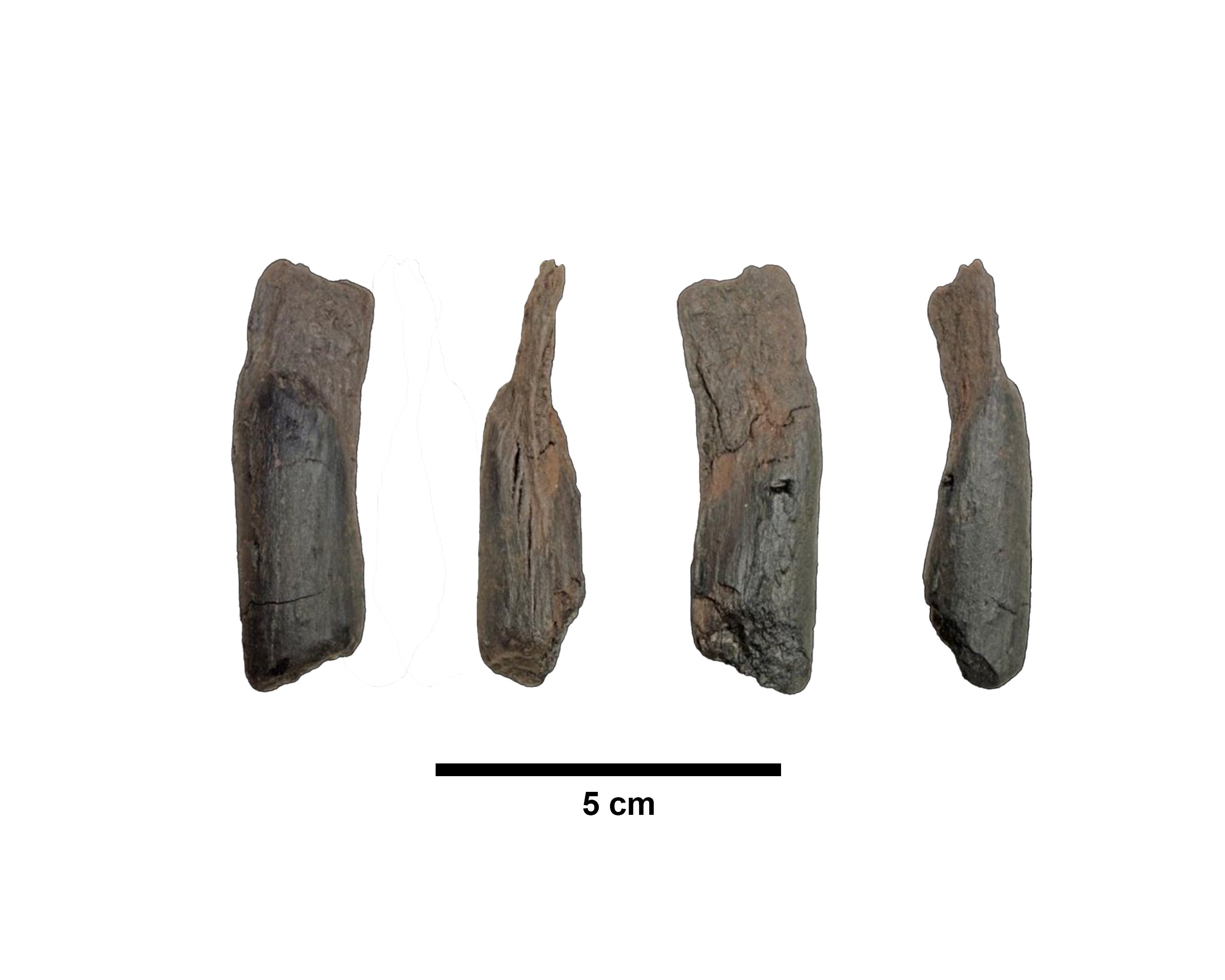
An international team of researchers from Germany, the United Kingdom, and Greece has discovered in Megalopoli the oldest known wooden tools used by humans.
The study, led by Professor Katerina Harvati, director of the Senckenberg Centre for Human Evolution and Palaeoenvironment, University of Tübingen, and Dr. Annemieke Milks of the University of Reading, describes the findings from the archaeological site Marathousa 1, which dates to the Lower Paleolithic period.
The artifacts, according to the article[1]Annemieke Milks, Maria Ntinou, Stylianos Koutalis, Dimitrios Michailidis, George E. Konidaris, Domenico Giusti, Nicholas Thompson, Georgia Tsartsidou, Eleni Panagopoulou, Vangelis Tourloukis, Panagiotis Karkanas, Katerina Harvati: Evi-dence for the earliest hominin use of wooden hand-held tools found at Marathousa 1 (Greece). PNAS, https://doi.org/10.1073/pnas.2515479123 published in the journal PNAS, consist of two objects that were manufactured and used by humans, one made from boxwood and the other from willow or poplar. These are the oldest wooden artifacts ever found, and push back the dating of the use of this type of tool by at least 40,000 years into the past.
Stone tools and skeletal remains of elephants and other animals indicate that the Marathousa 1 site, which was once located on the shore of the Pleistocene lake of Megalopoli, was used by Paleolithic humans for butchering animals approximately 430,000 years ago, during the Middle Pleistocene – the period from approximately 774,000 to 129,000 years ago.
“The Middle Pleistocene was a critical phase in human evolution, during which more complex behaviors developed. The first reliable evidence for the targeted technological use of wood dates from this period,” says Professor of Paleoanthropology Katerina Harvati, a leading expert in human evolution who heads the long-term research program.
The stone and bone artifacts found at Marathousa 1 highlight the skill and varied activities of the people who once lived there. Therefore, the research team carefully examined the wooden finds that emerged from the excavation of the site as well.
“Unlike stone objects, wooden objects require special conditions to remain in good condition for a long period of time,” says Dr. Annemieke Milks, an expert on early wooden tools. “We carefully examined all the wooden finds, observing their surfaces under the microscope. We found marks from cutting and scraping on two objects – clear indications that they had been shaped by early humans.”
Detailed examination
The research team identified two wooden objects that had been worked by humans: a small piece of boxwood trunk bearing clear marks of processing as well as use-wear marks. The wood was most likely used for digging on the lake shores or for removing tree bark.
A second, very small piece of wood from willow or poplar also shows processing marks and possible use-wear marks. A third find – a larger piece of boxwood trunk with deep grooves – appears to have been shaped by a large carnivorous animal, possibly a bear, and not by humans, the researchers concluded.
“The oldest wooden tools come from the United Kingdom, Zambia, Germany, and China, and include spears, digging sticks, and tool handles. However, all are more recent than the Marathousa 1 finds,” says Annemieke Milks. The only older evidence of wood use comes from the Kalambo Falls site in Zambia, dated to approximately 476,000 years ago. However, this was not used as a tool, but as a structural material.
“Our research has brought to light the oldest wooden tools known to date worldwide, which are also the only such finds from southeastern Europe,” says Katerina Harvati. “This discovery is due to the extremely rare, ideal preservation conditions at Marathousa 1 and once again highlights the importance of the site, and more generally of the Megalopoli basin, for human evolution.”
The study involved researchers from Aristotle University of Thessaloniki, the Ministry of Culture, the American School of Classical Studies in Athens, and the University of Ioannina. The research is funded by the European Research Council and the German Research Foundation.

References
| 1. | ↑ | Annemieke Milks, Maria Ntinou, Stylianos Koutalis, Dimitrios Michailidis, George E. Konidaris, Domenico Giusti, Nicholas Thompson, Georgia Tsartsidou, Eleni Panagopoulou, Vangelis Tourloukis, Panagiotis Karkanas, Katerina Harvati: Evi-dence for the earliest hominin use of wooden hand-held tools found at Marathousa 1 (Greece). PNAS, https://doi.org/10.1073/pnas.2515479123 |